Schools & Libraries — Find Yours
Browse all 25,226 billed entities (school districts, library systems, consortia) alphabetically.
Schools & Libraries — State Reports
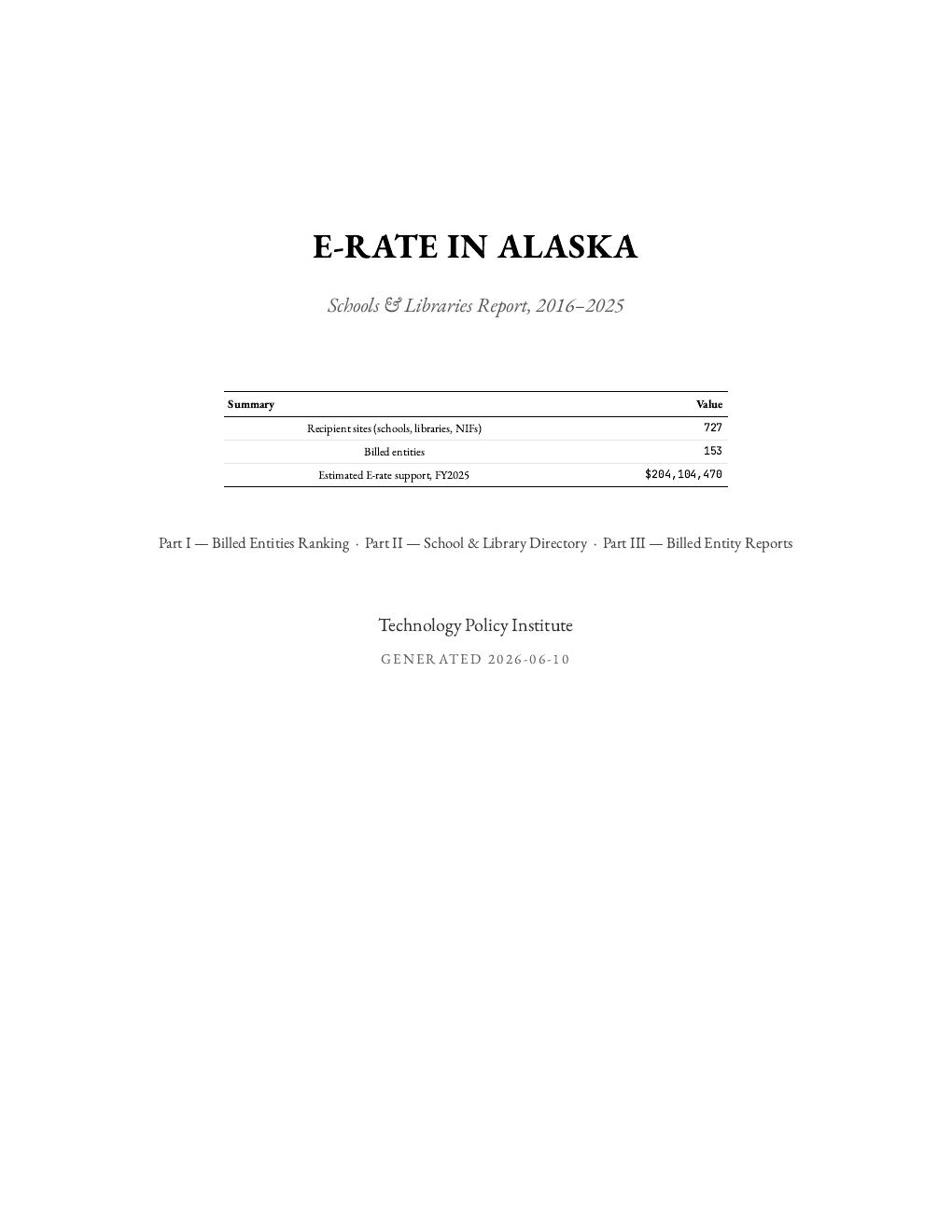
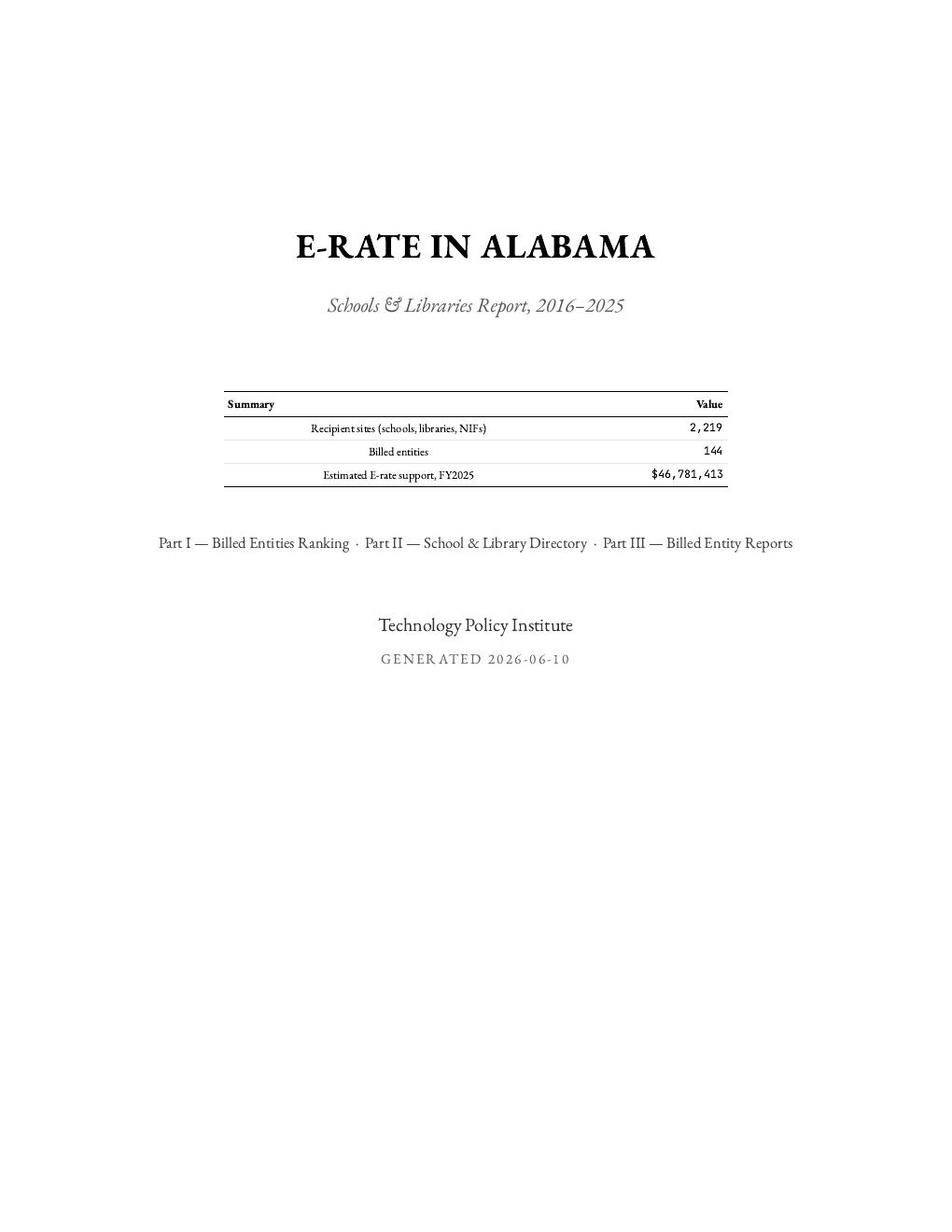
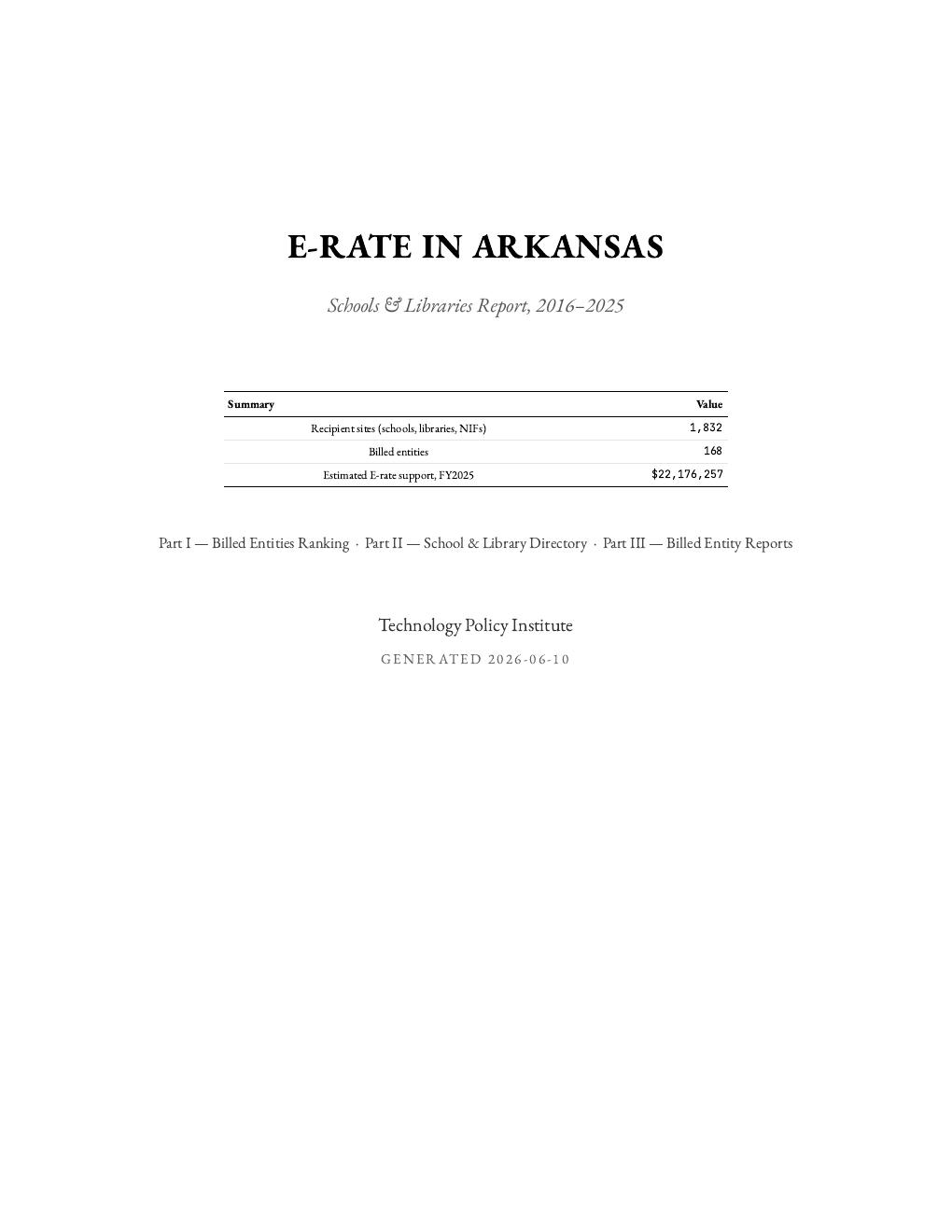
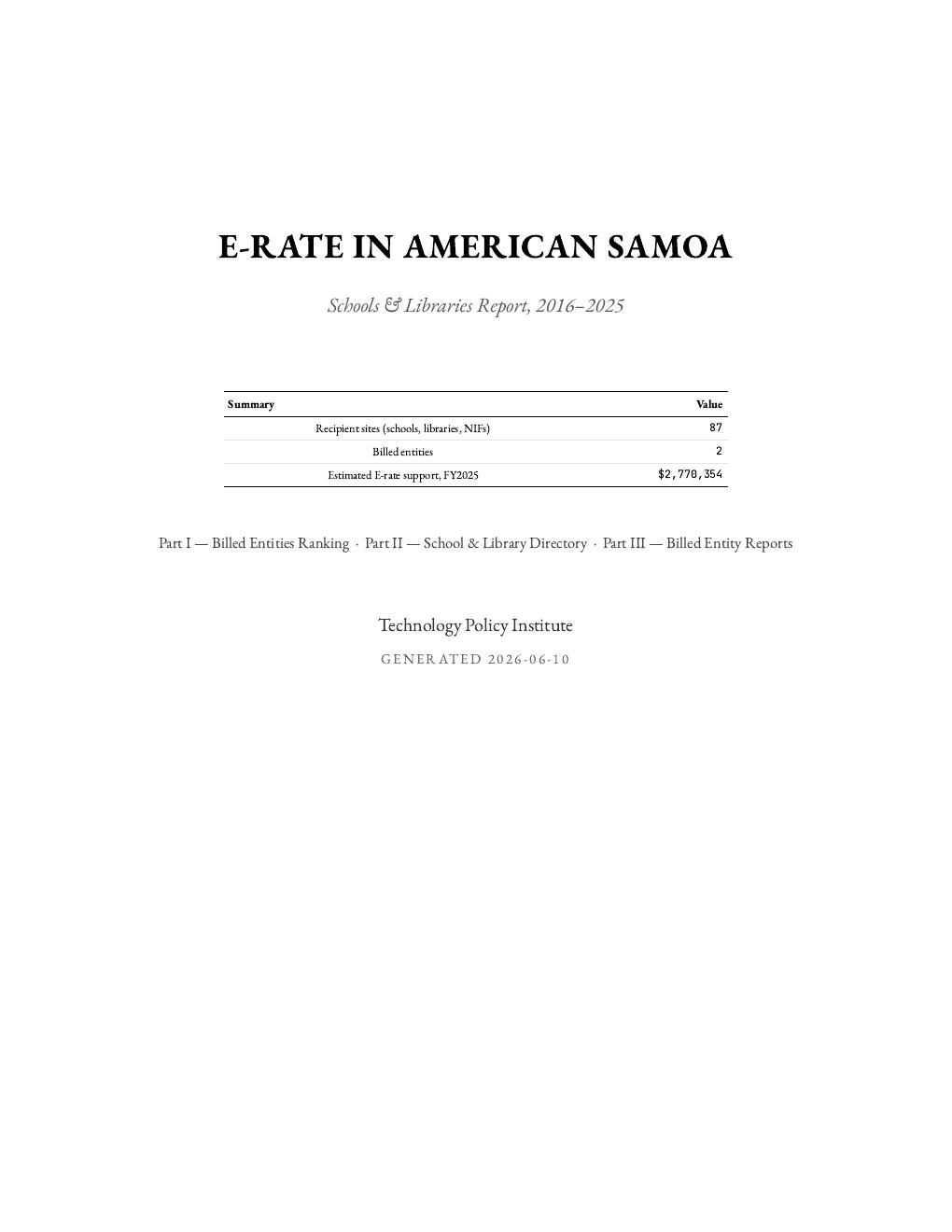
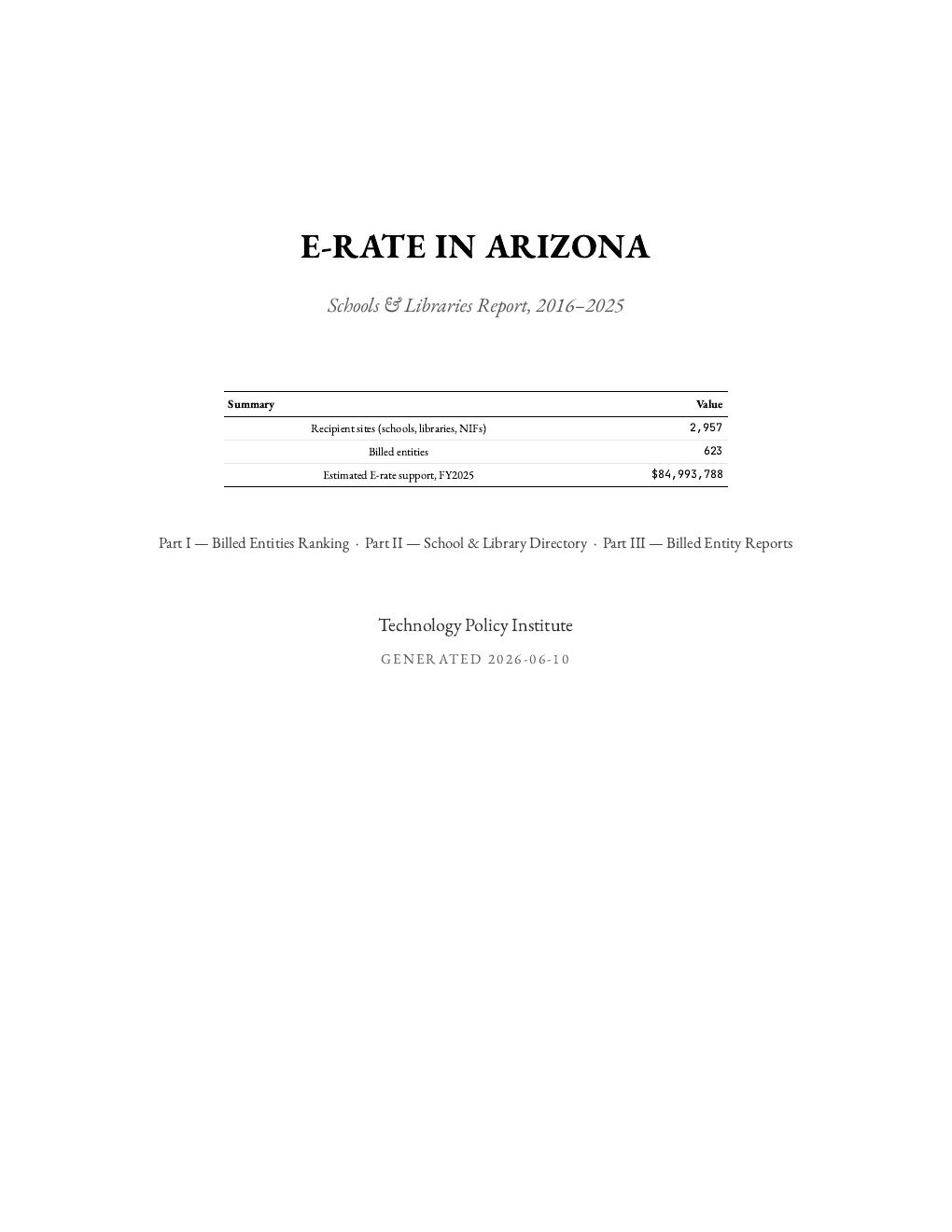
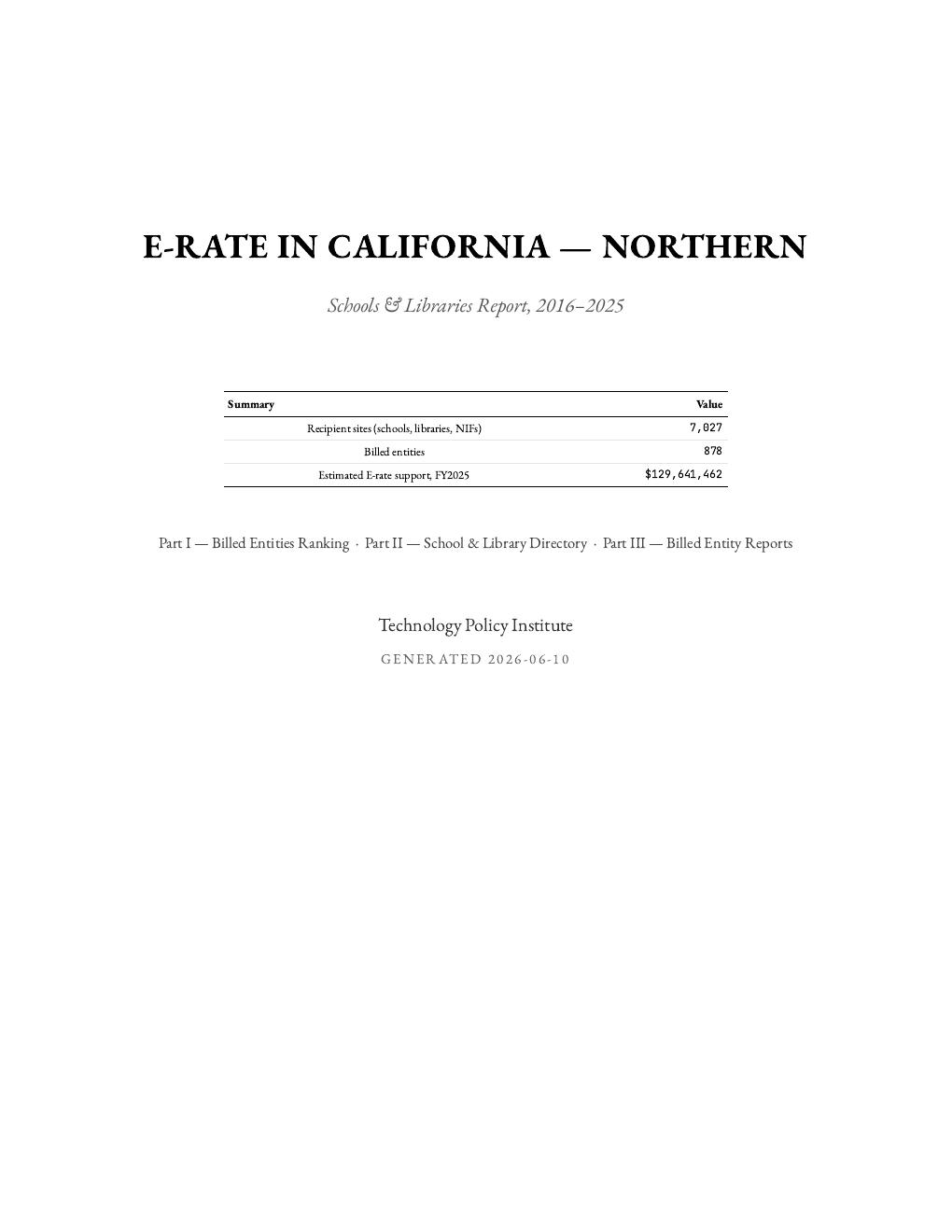
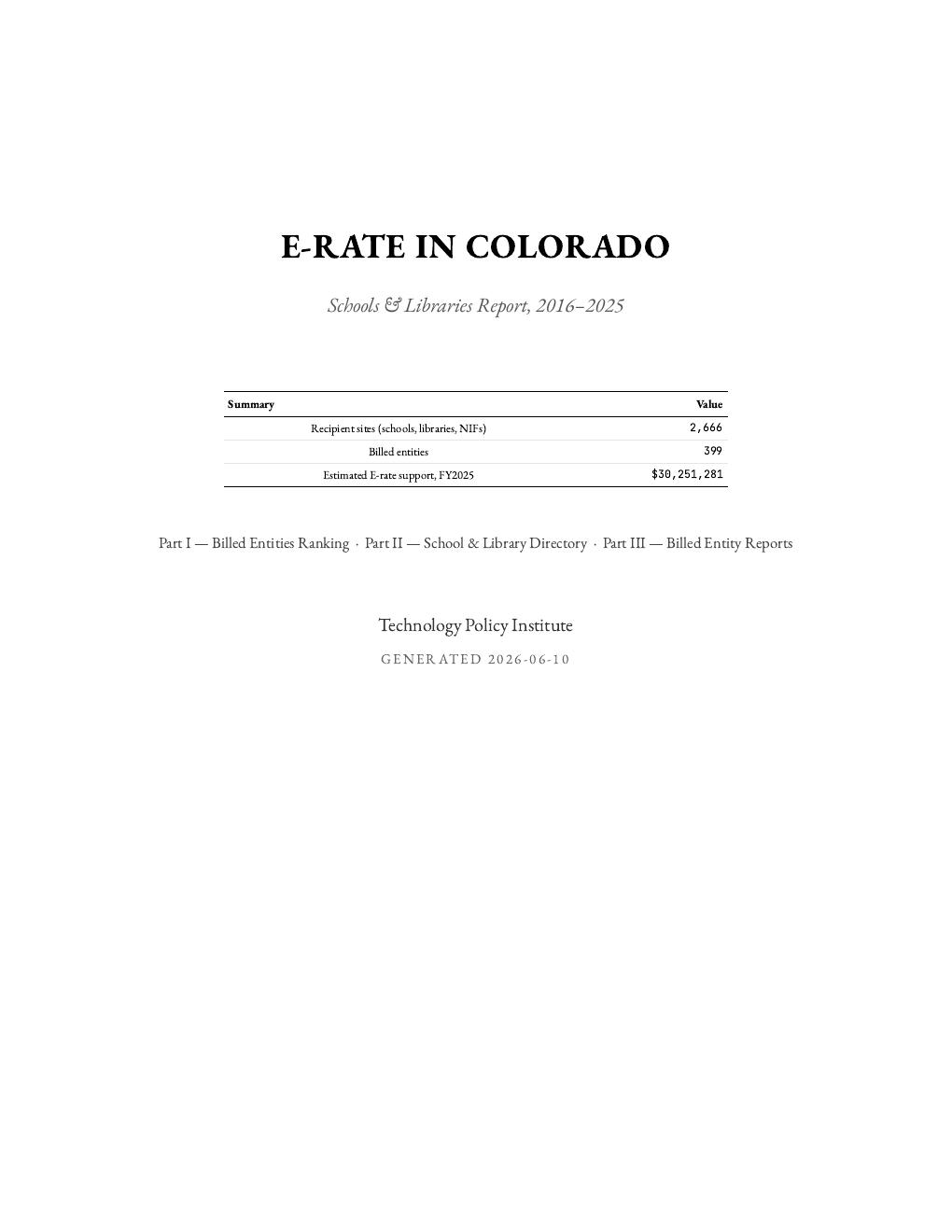
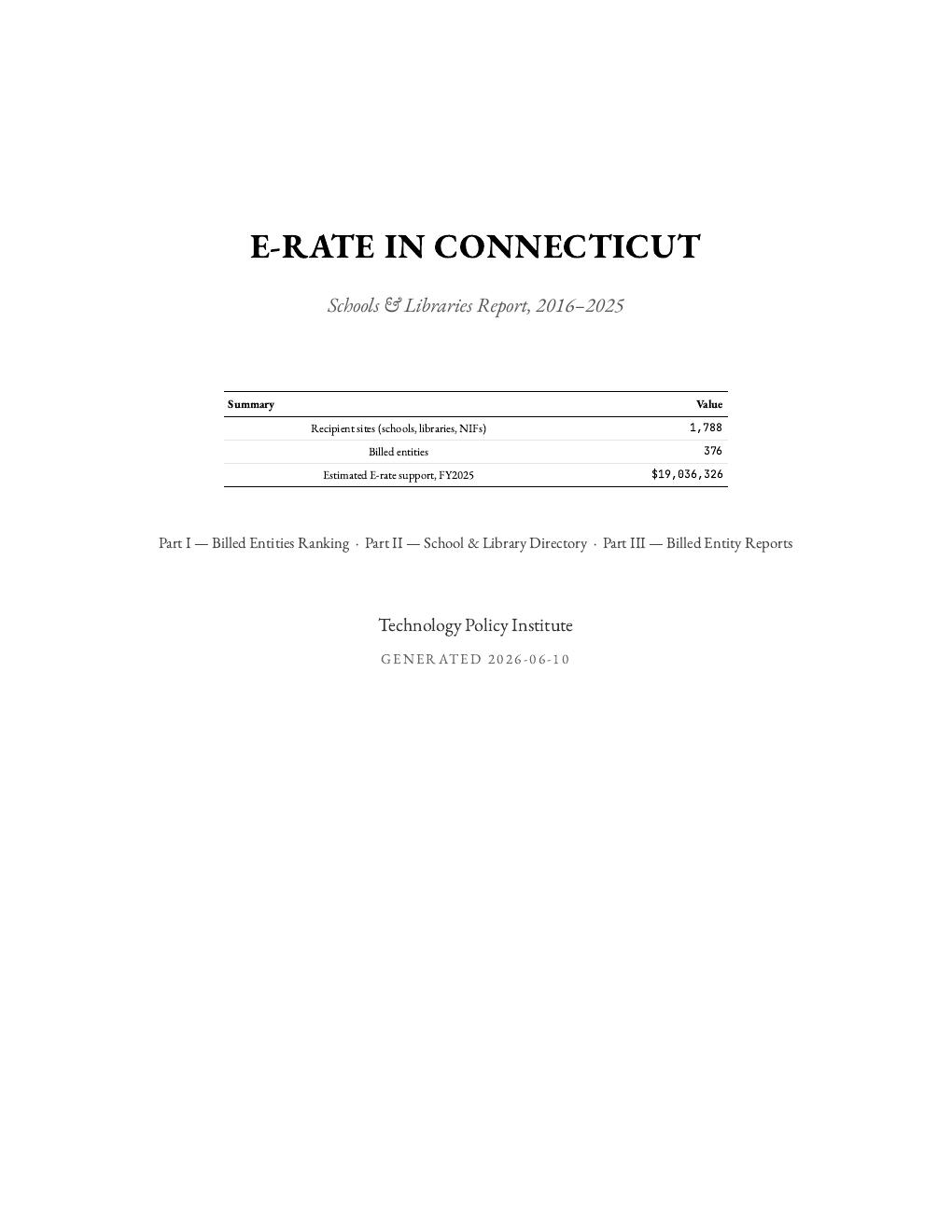
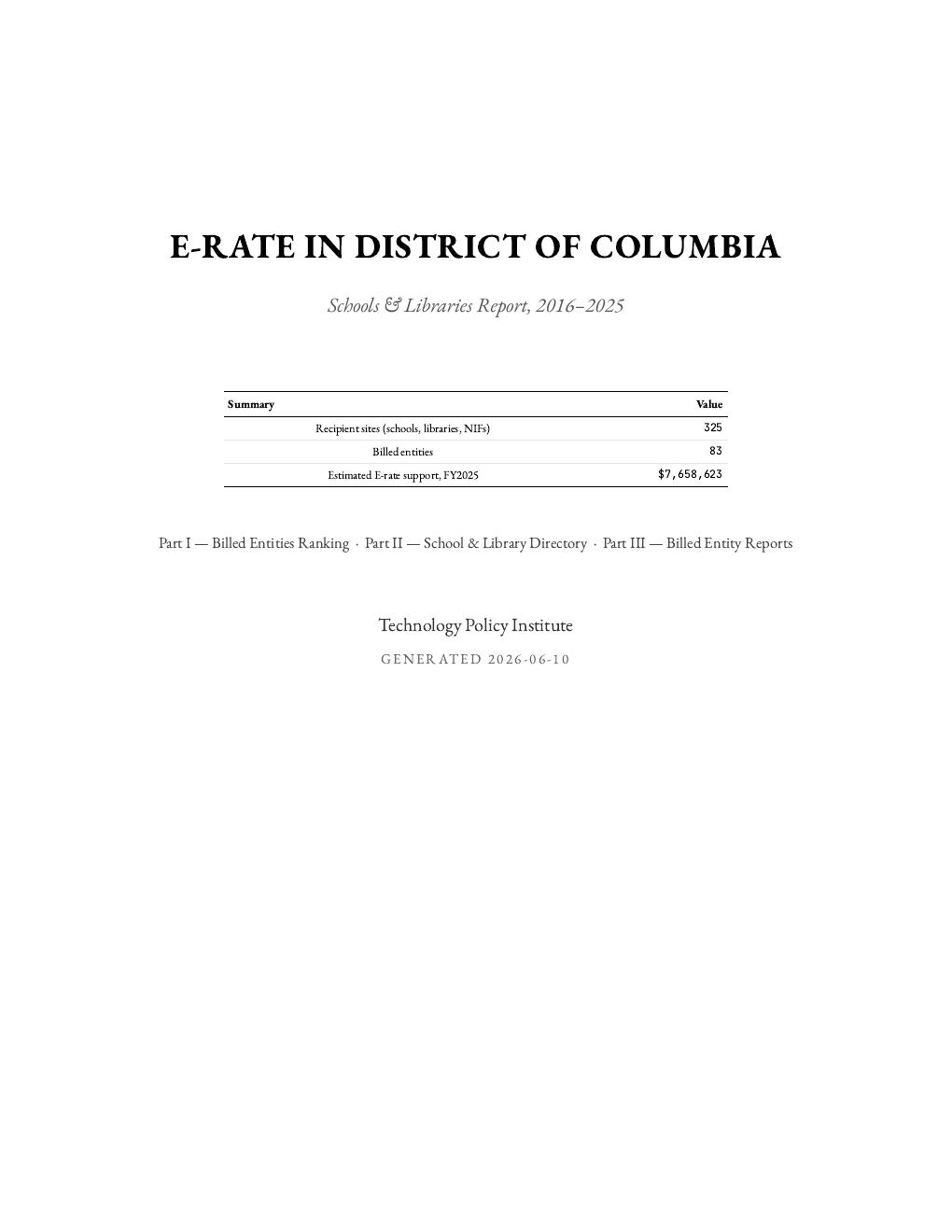
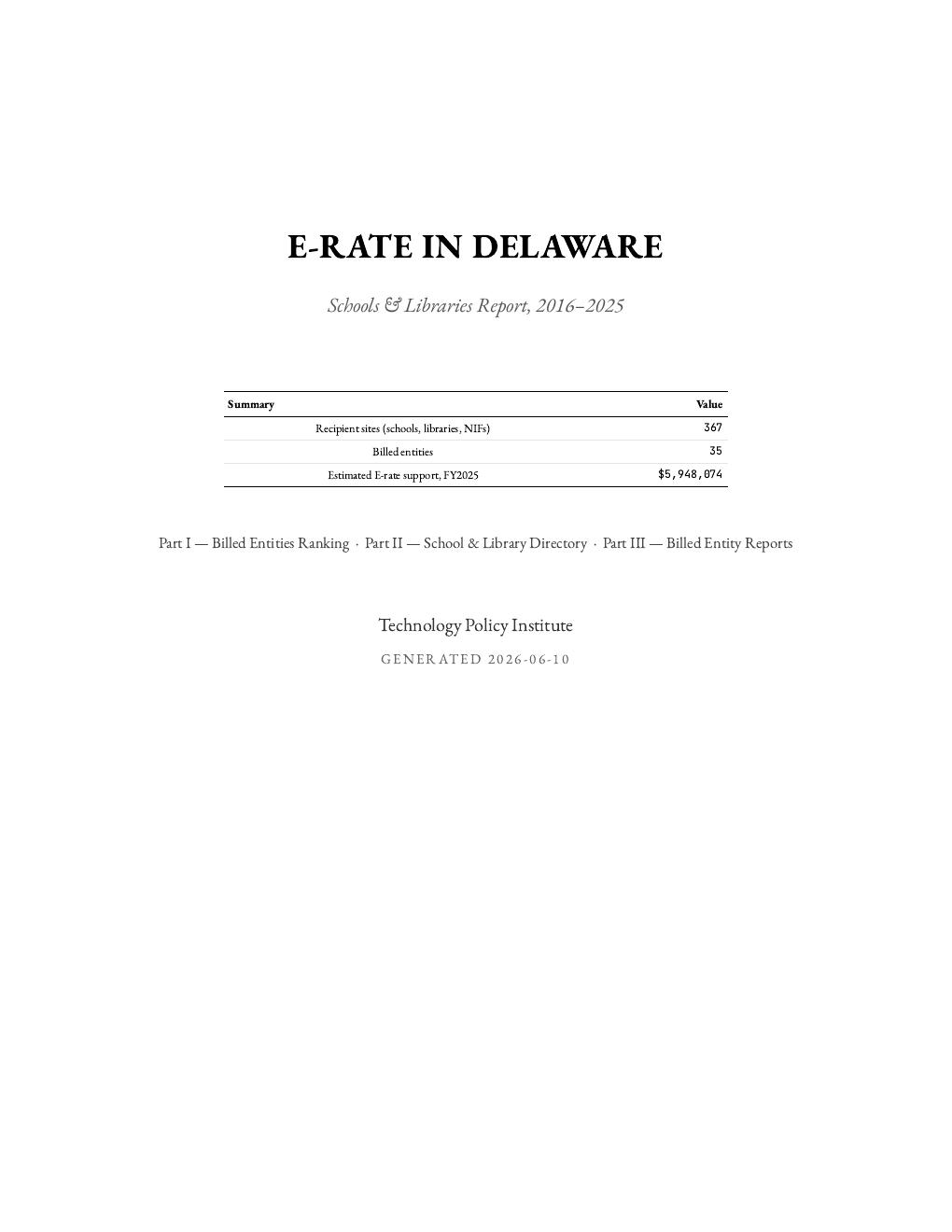
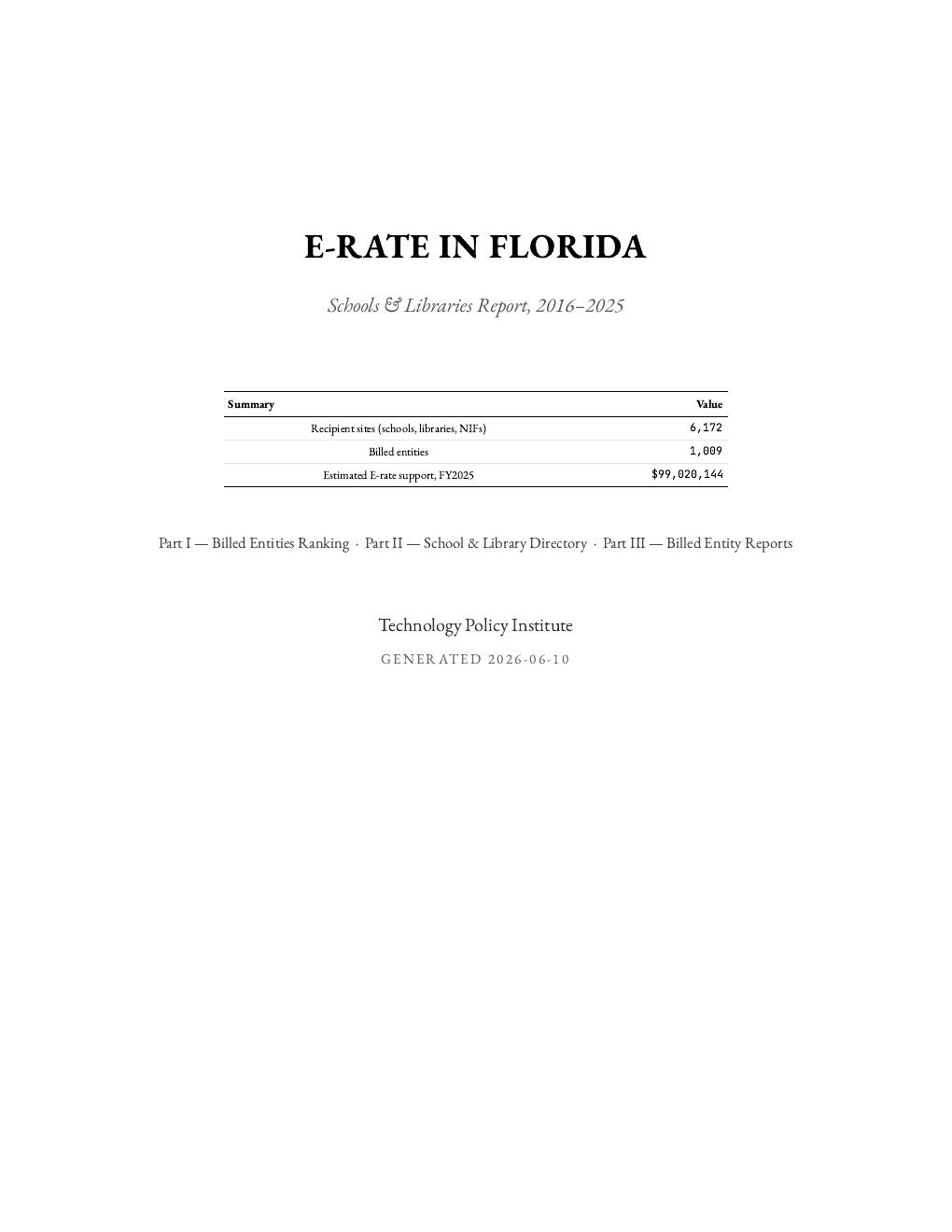
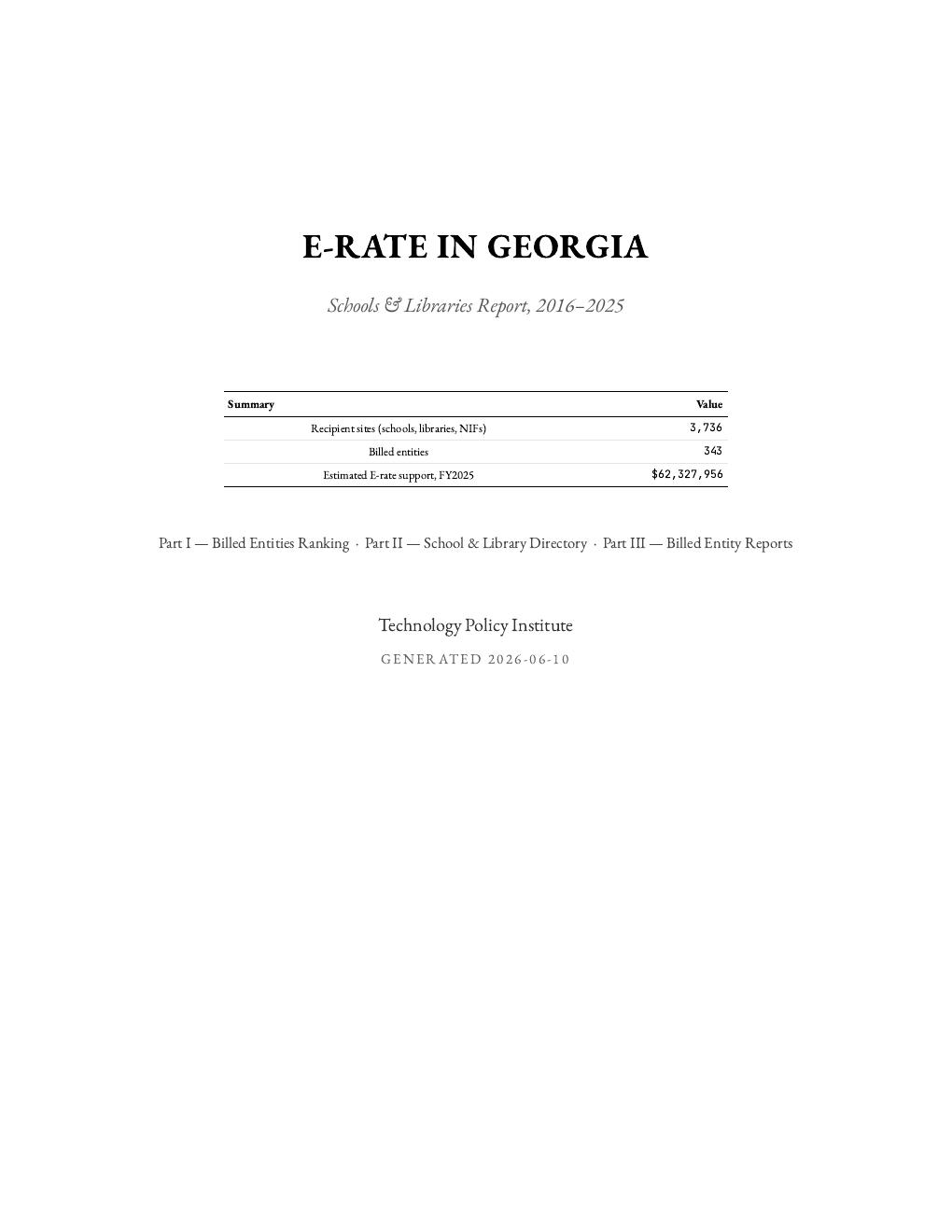
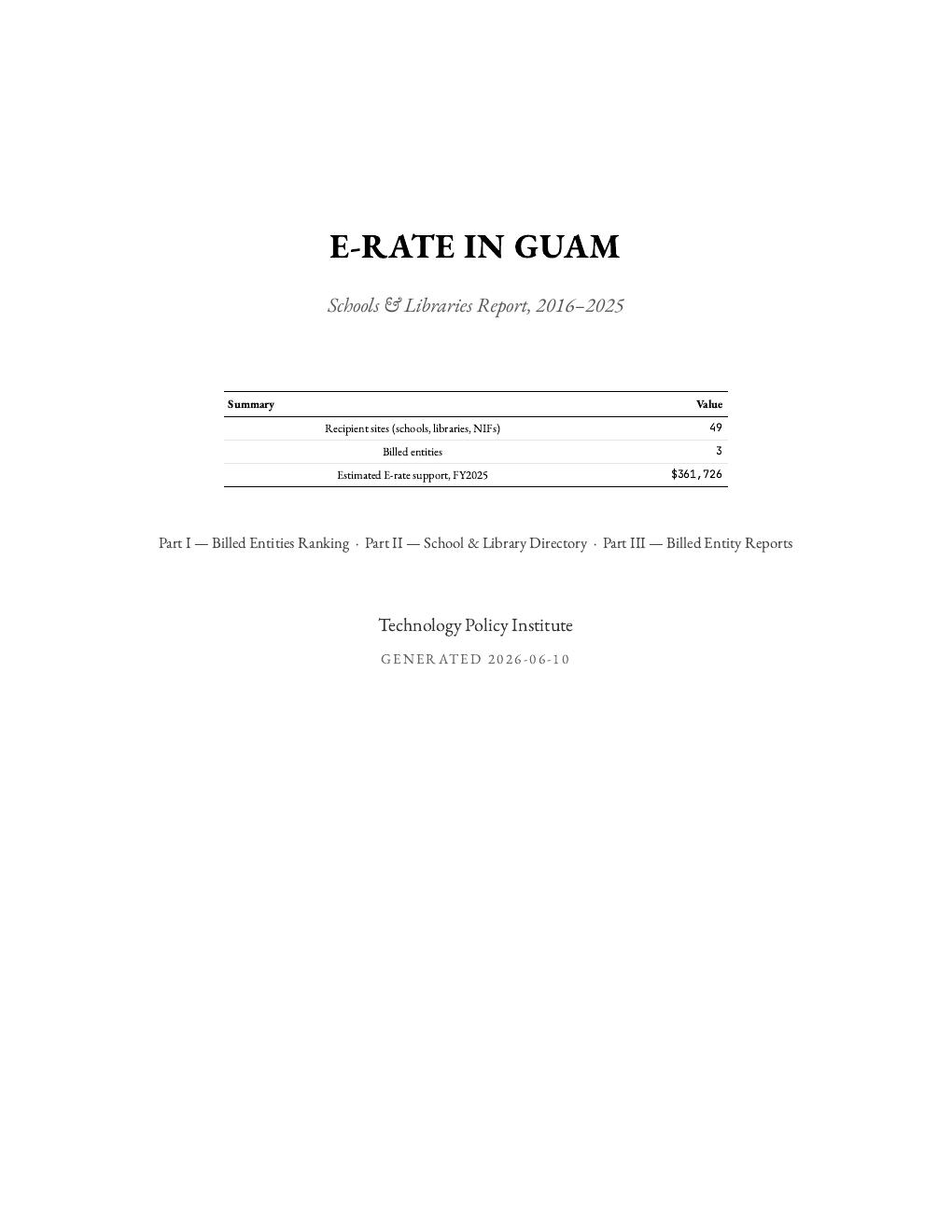
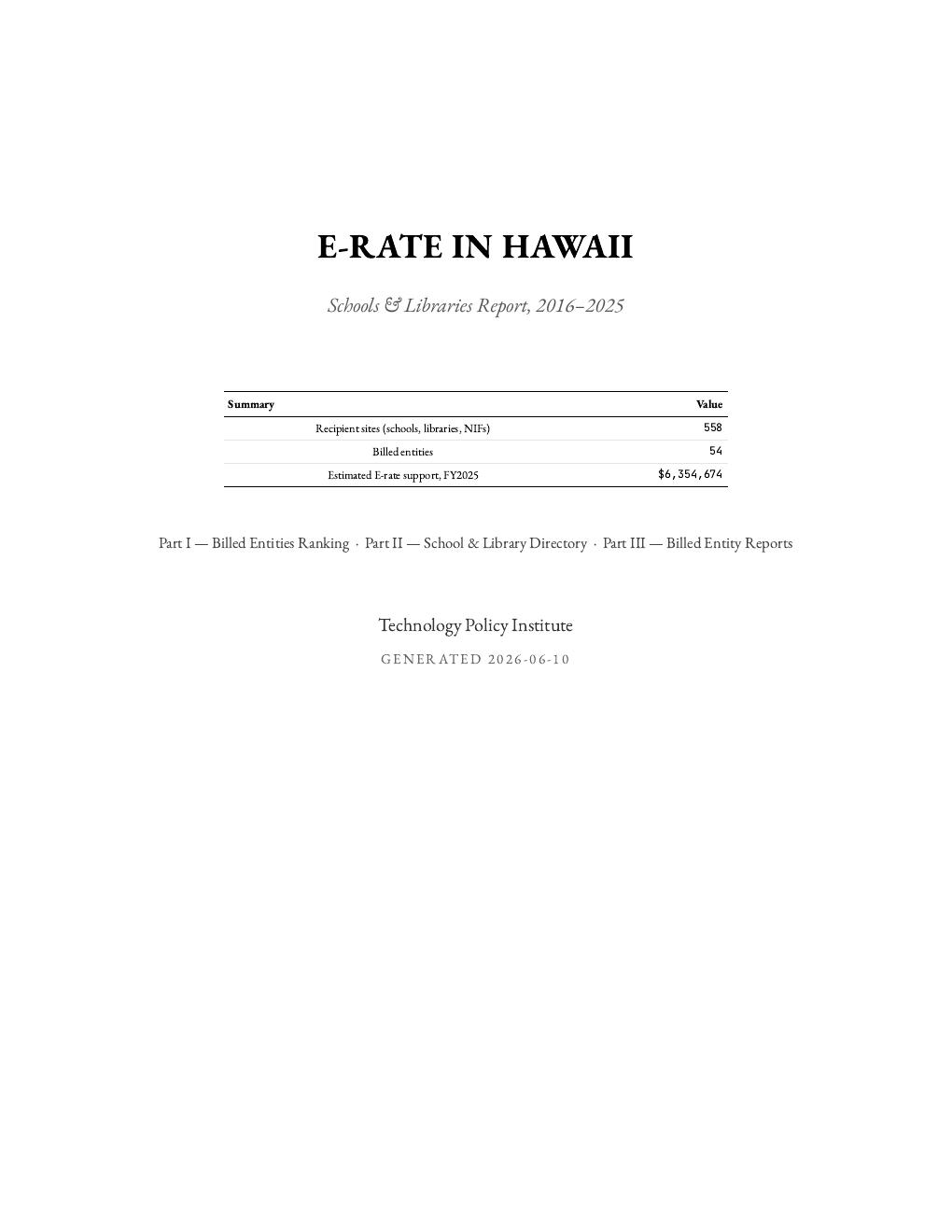
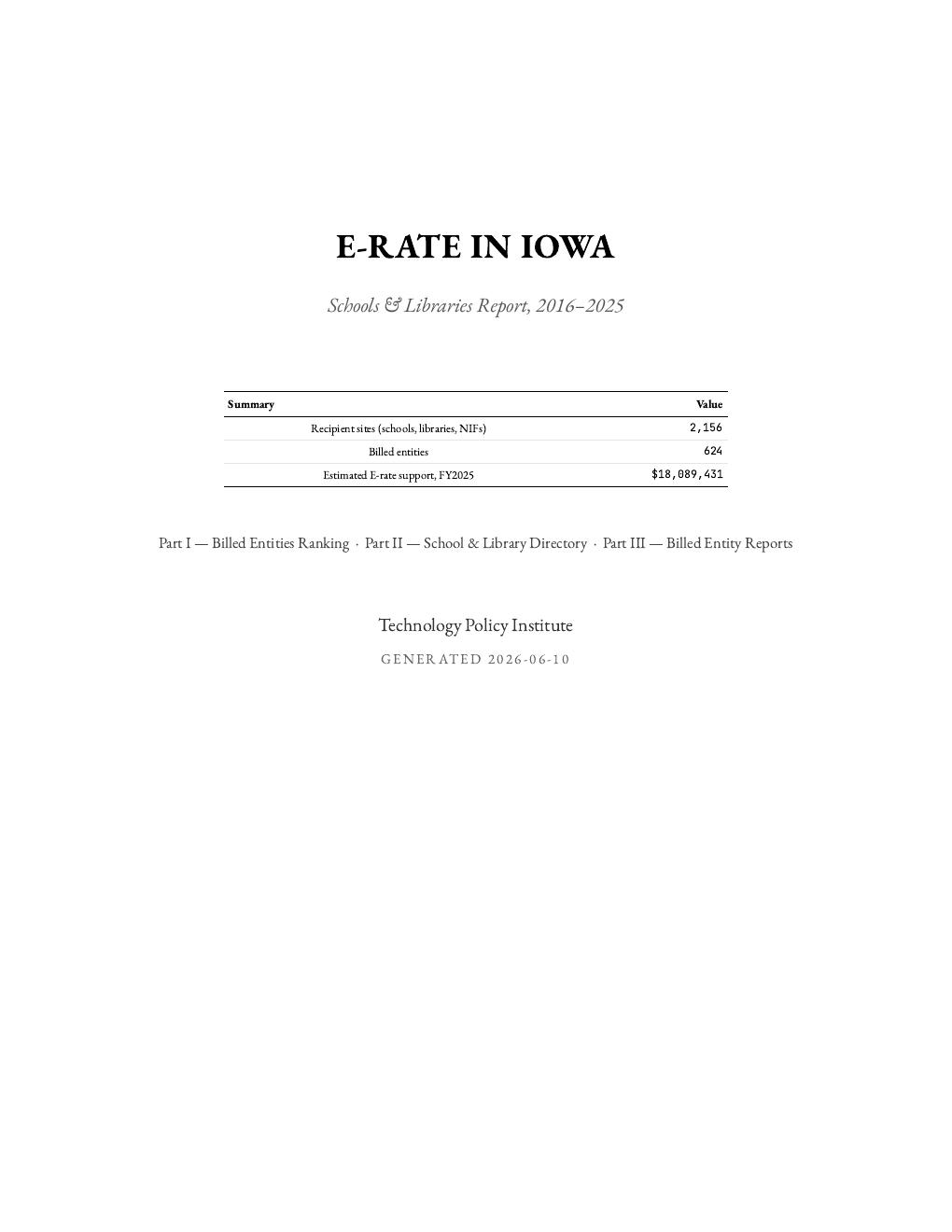
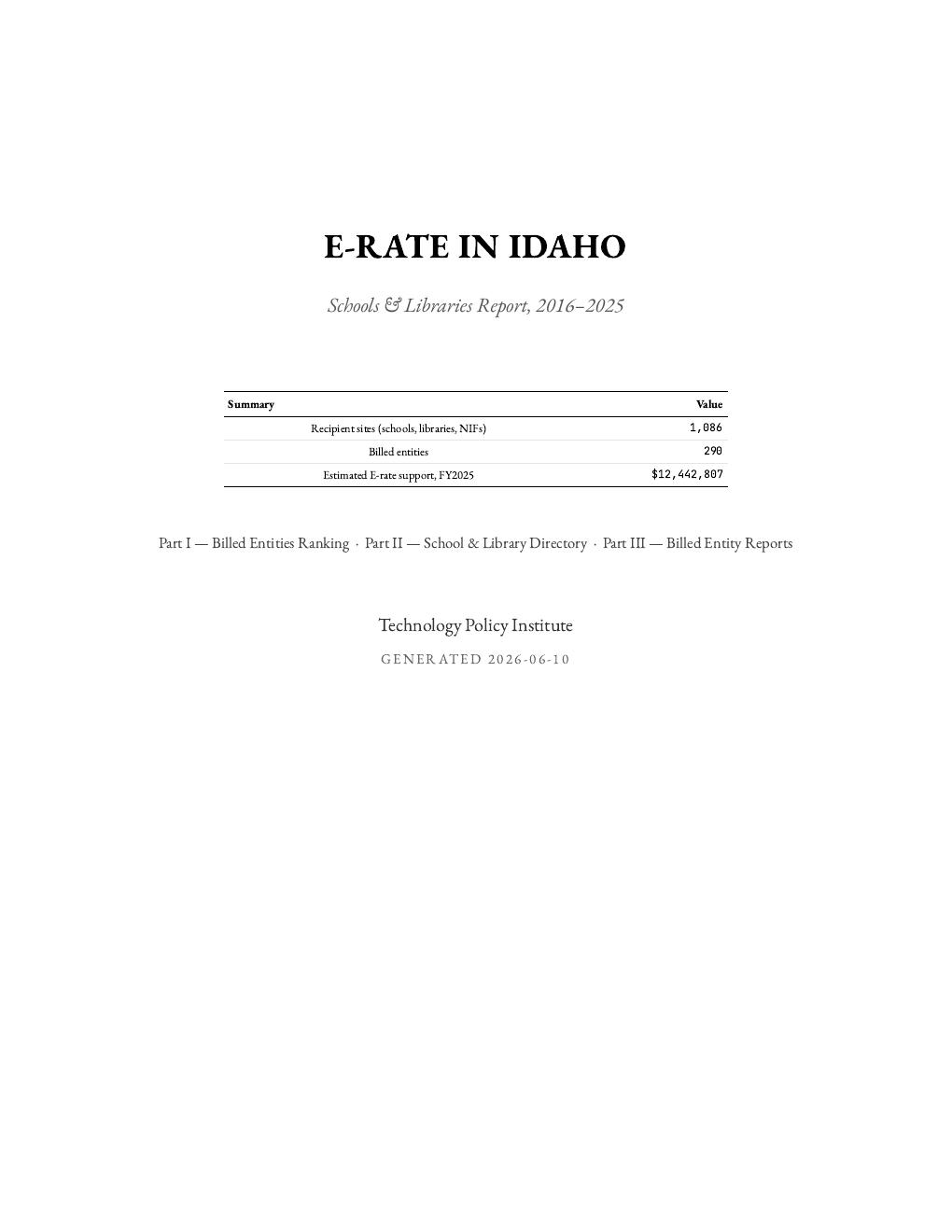
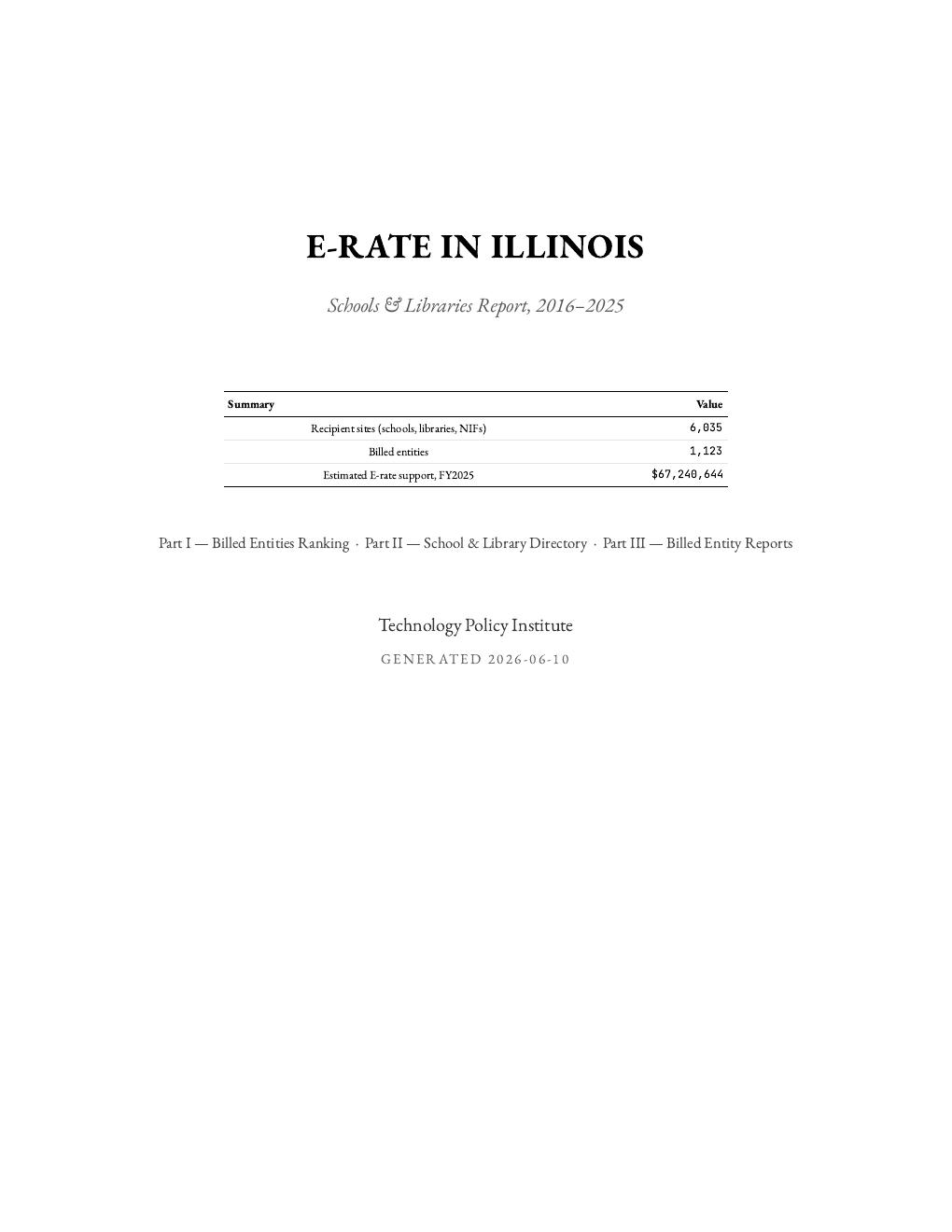
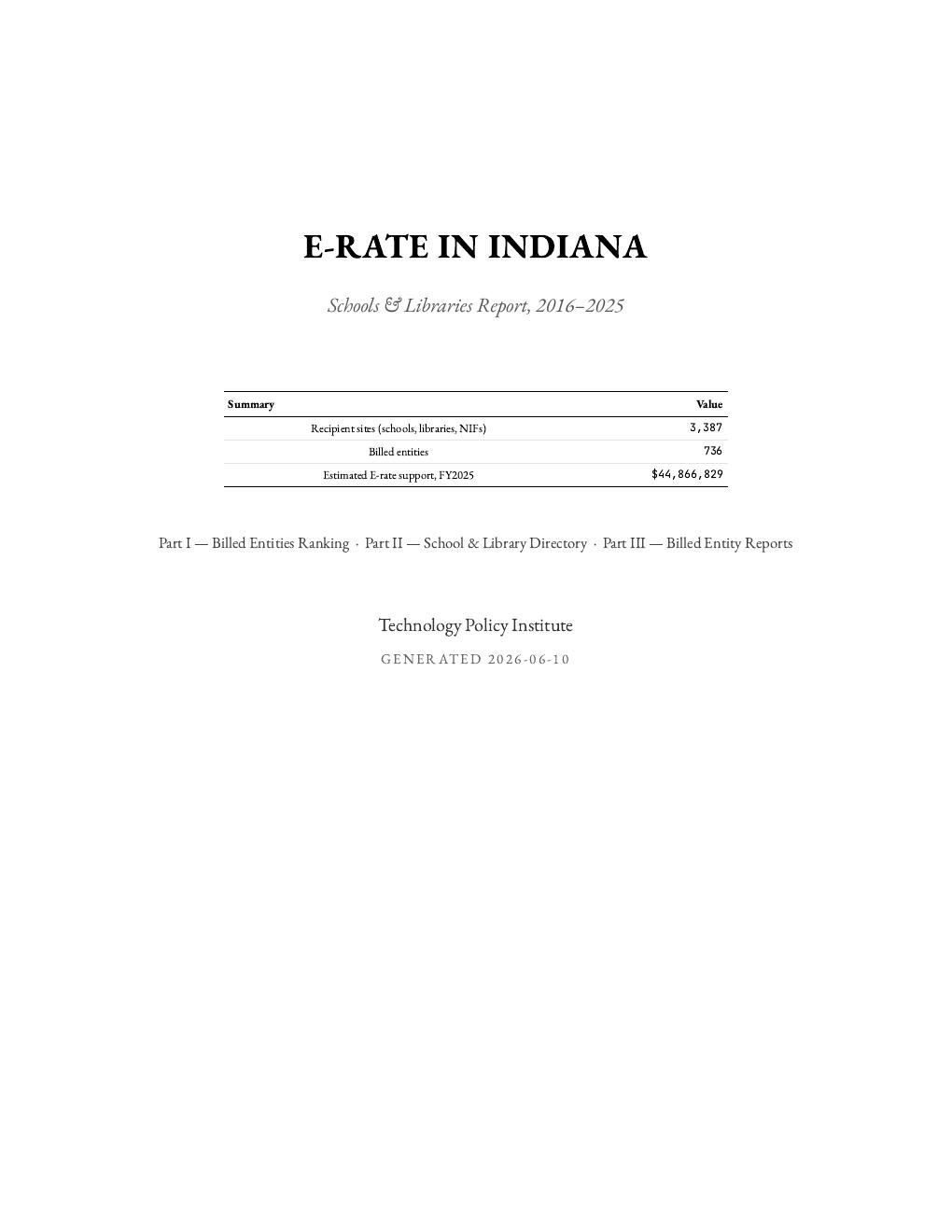
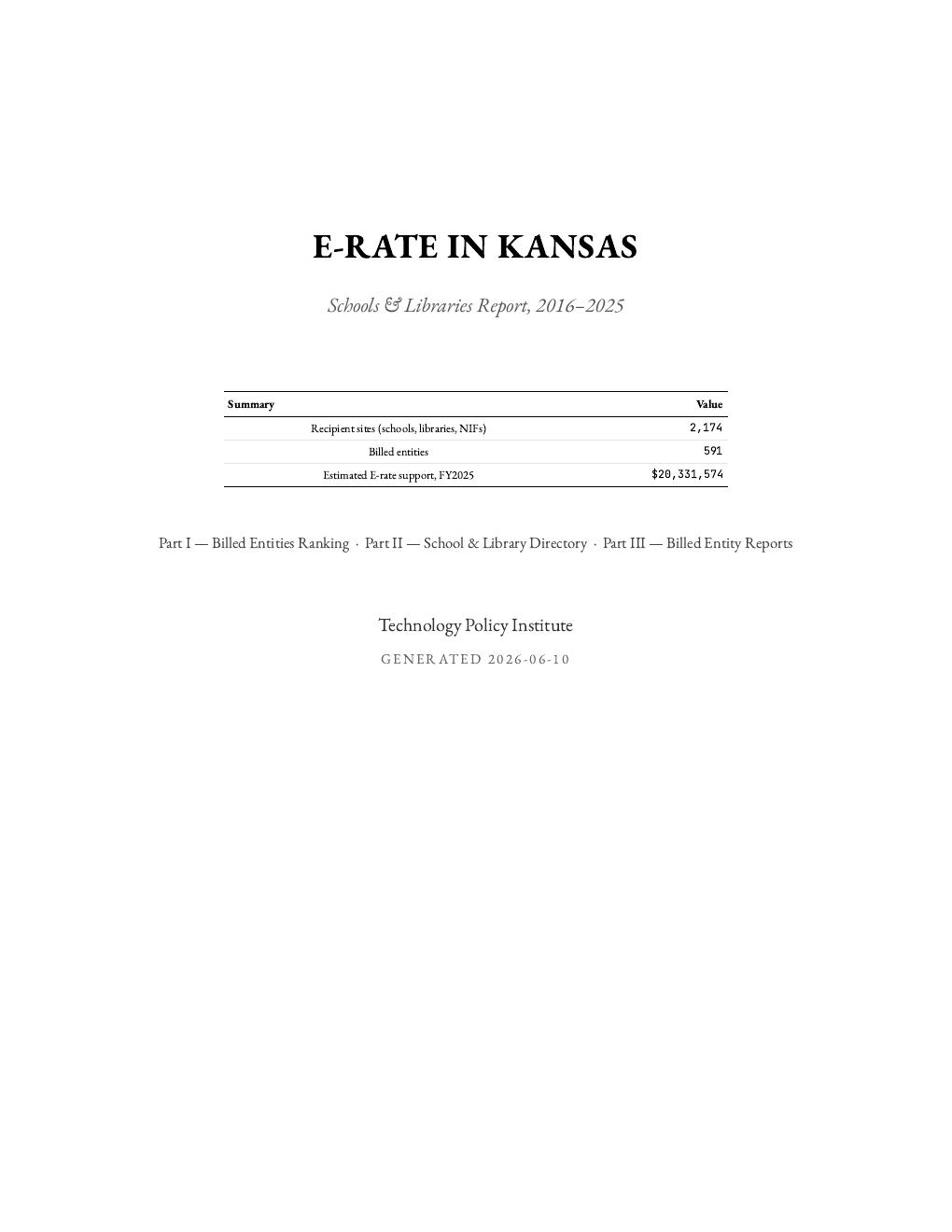
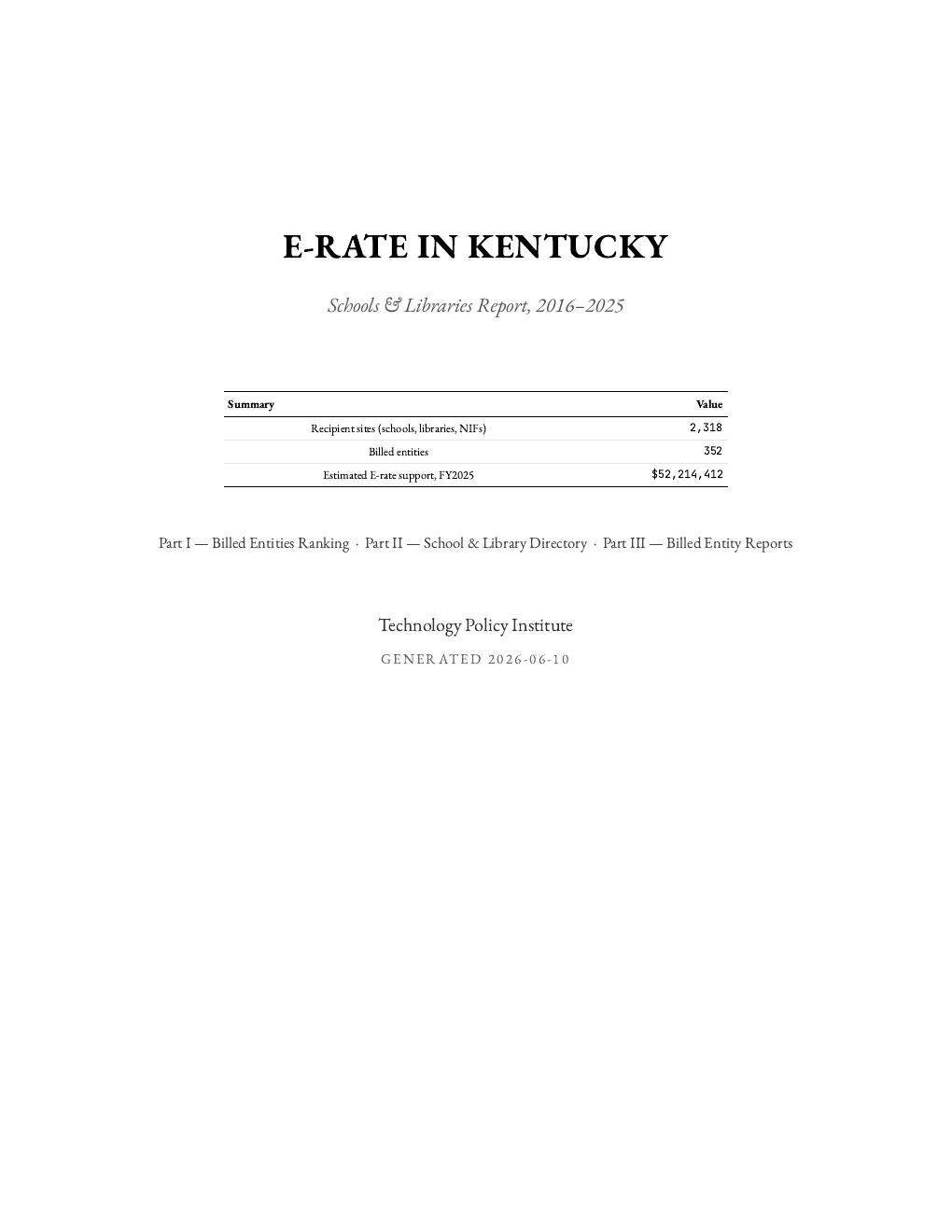
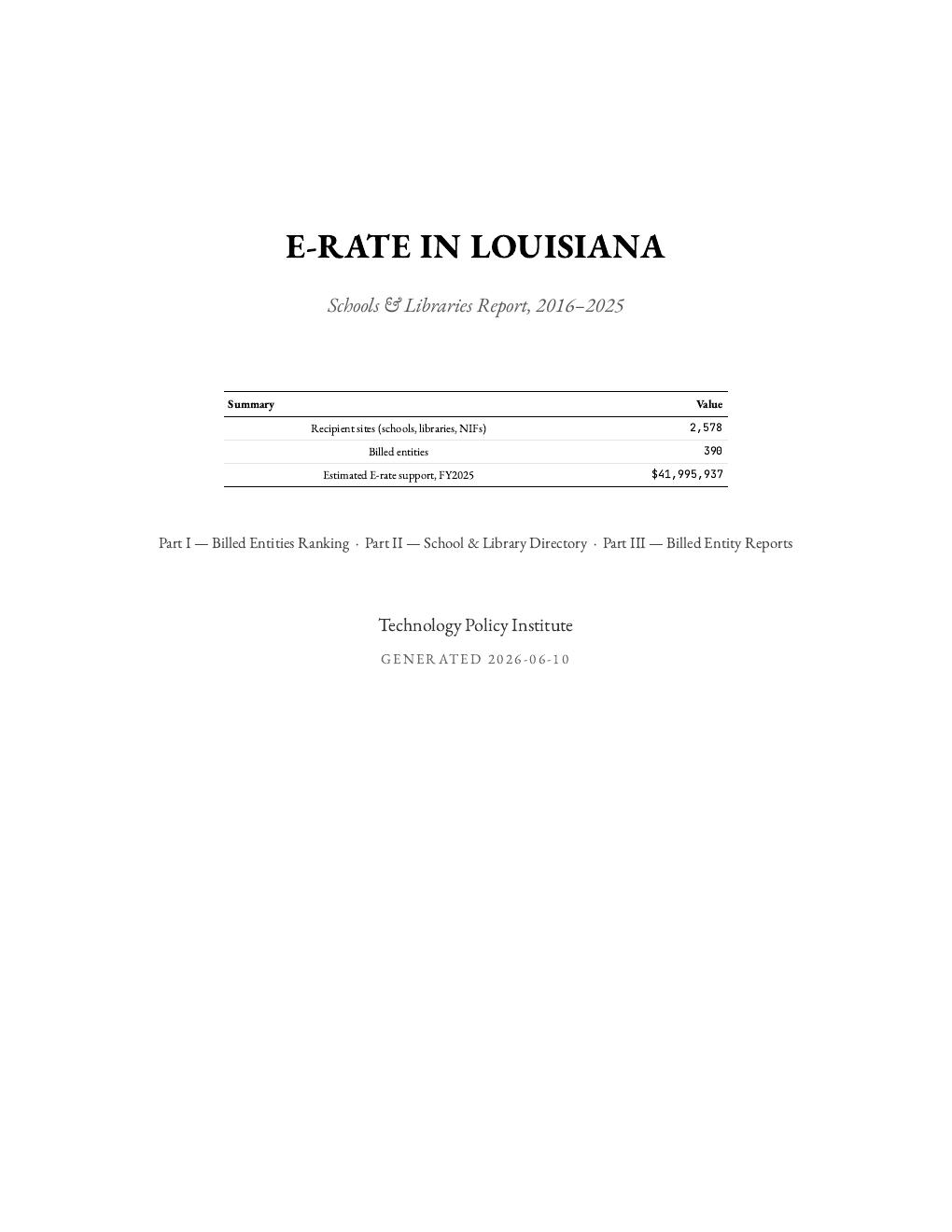
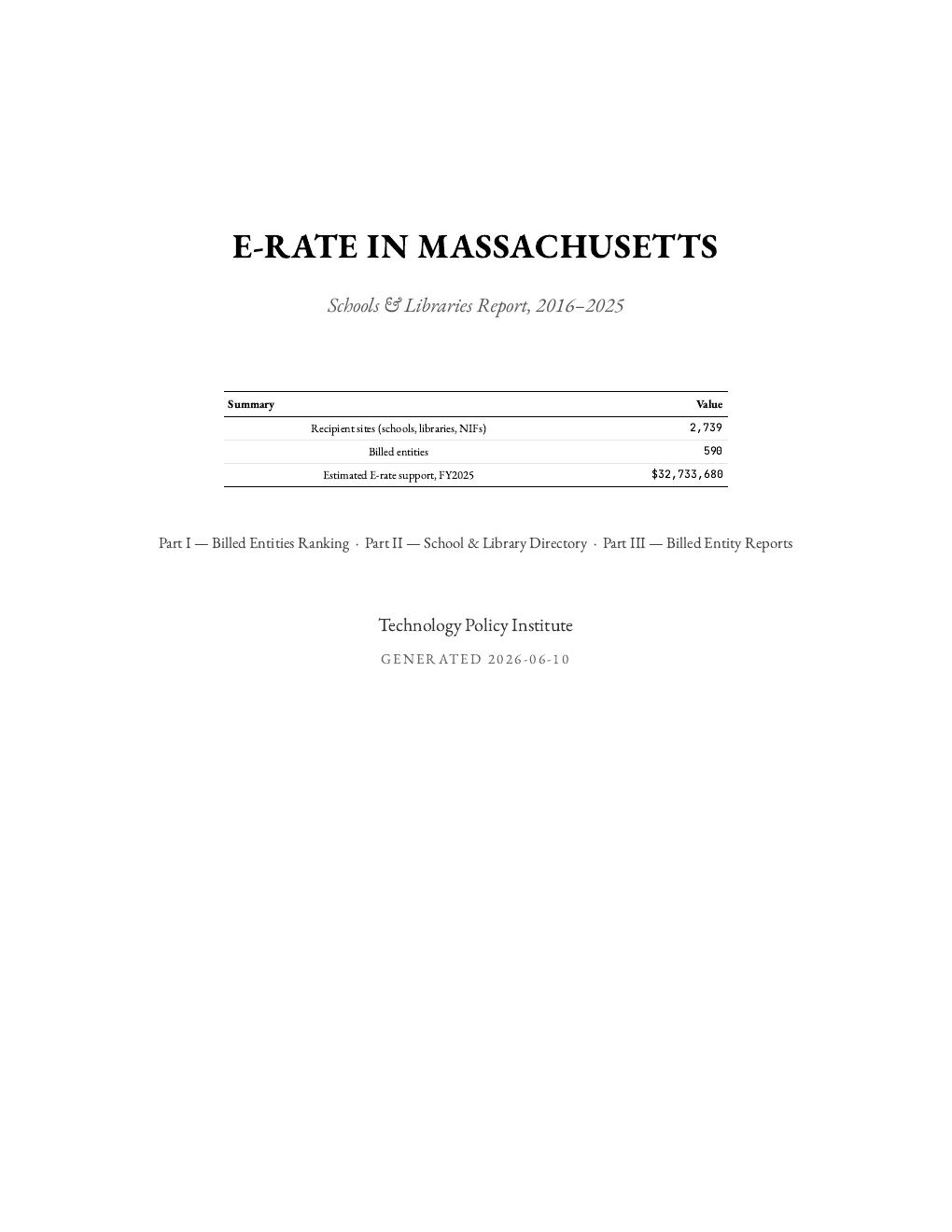
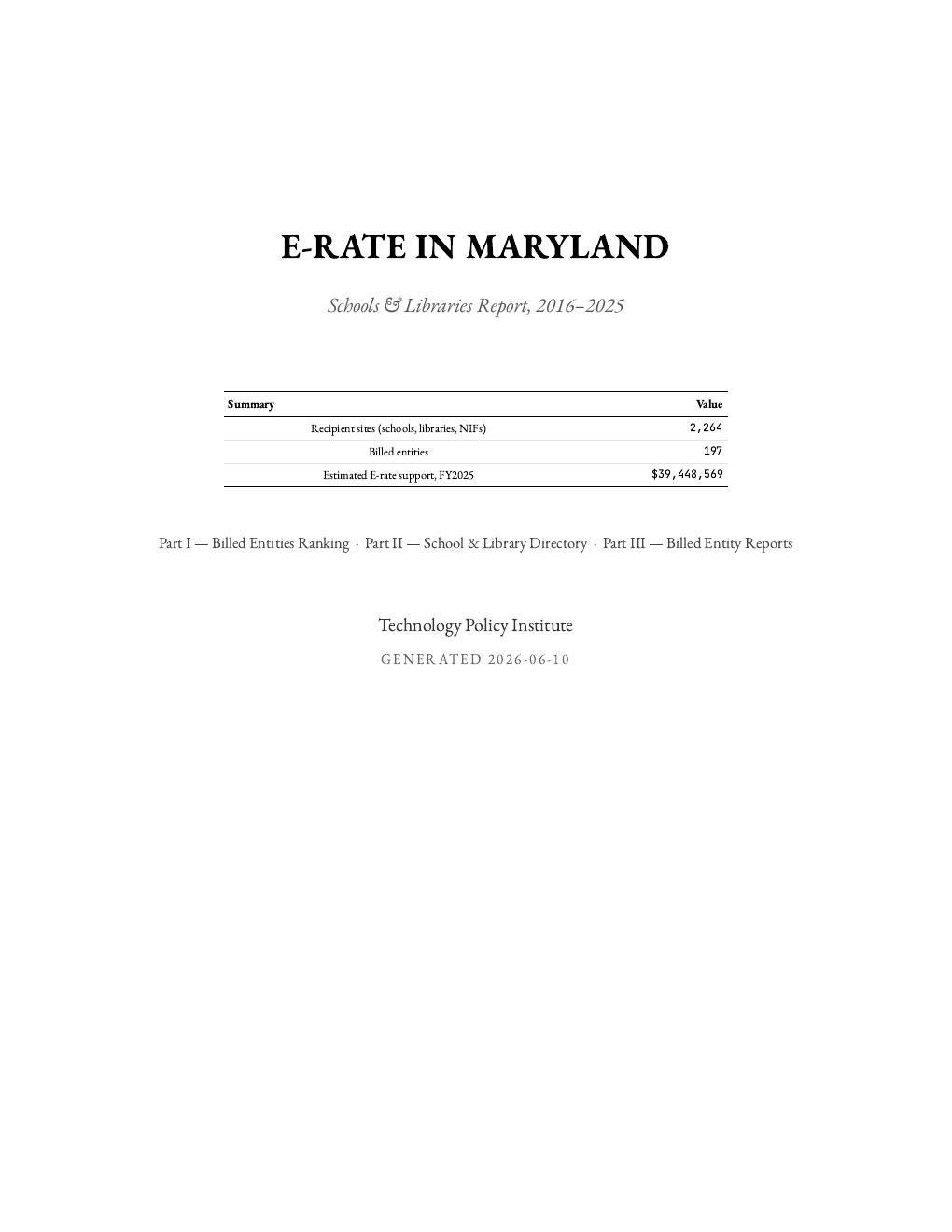
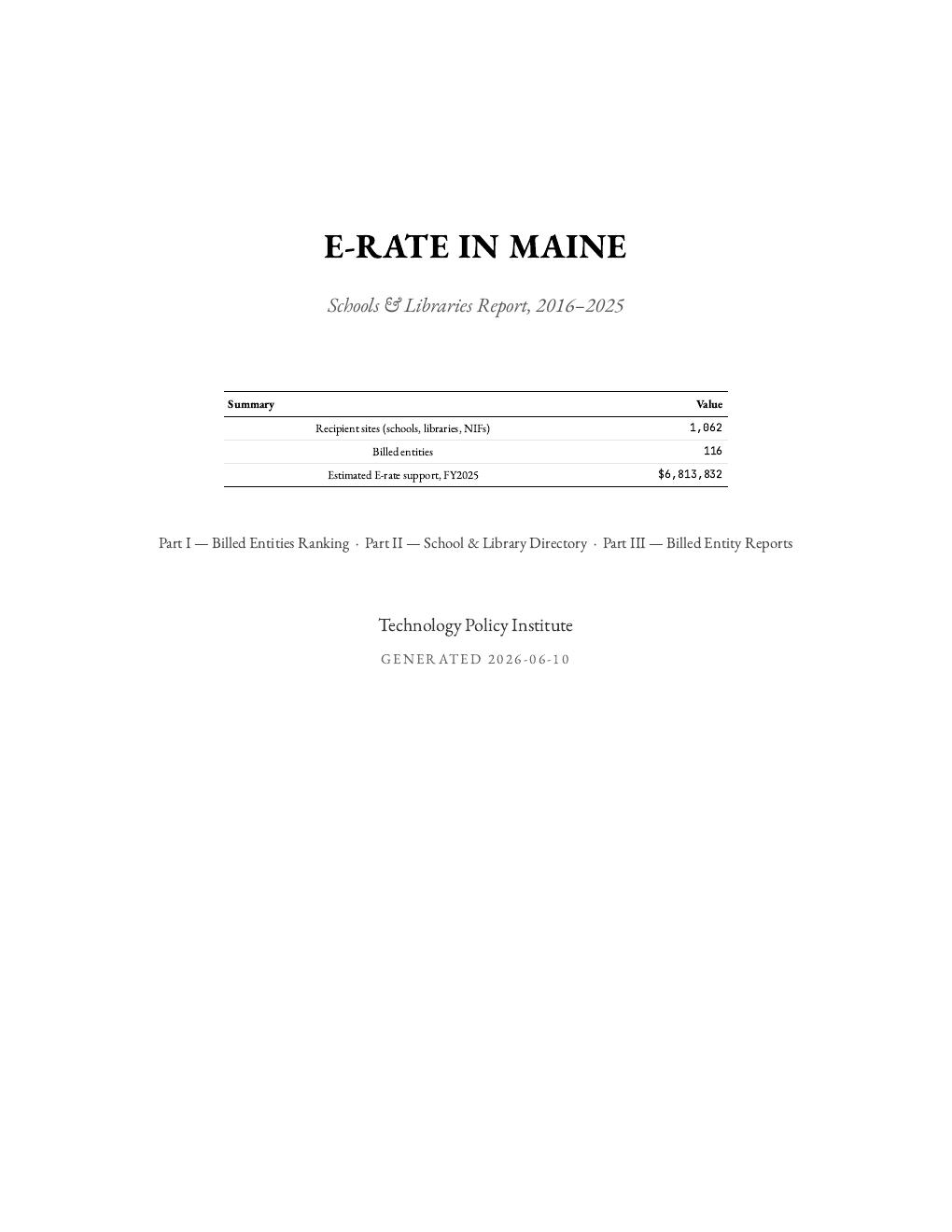
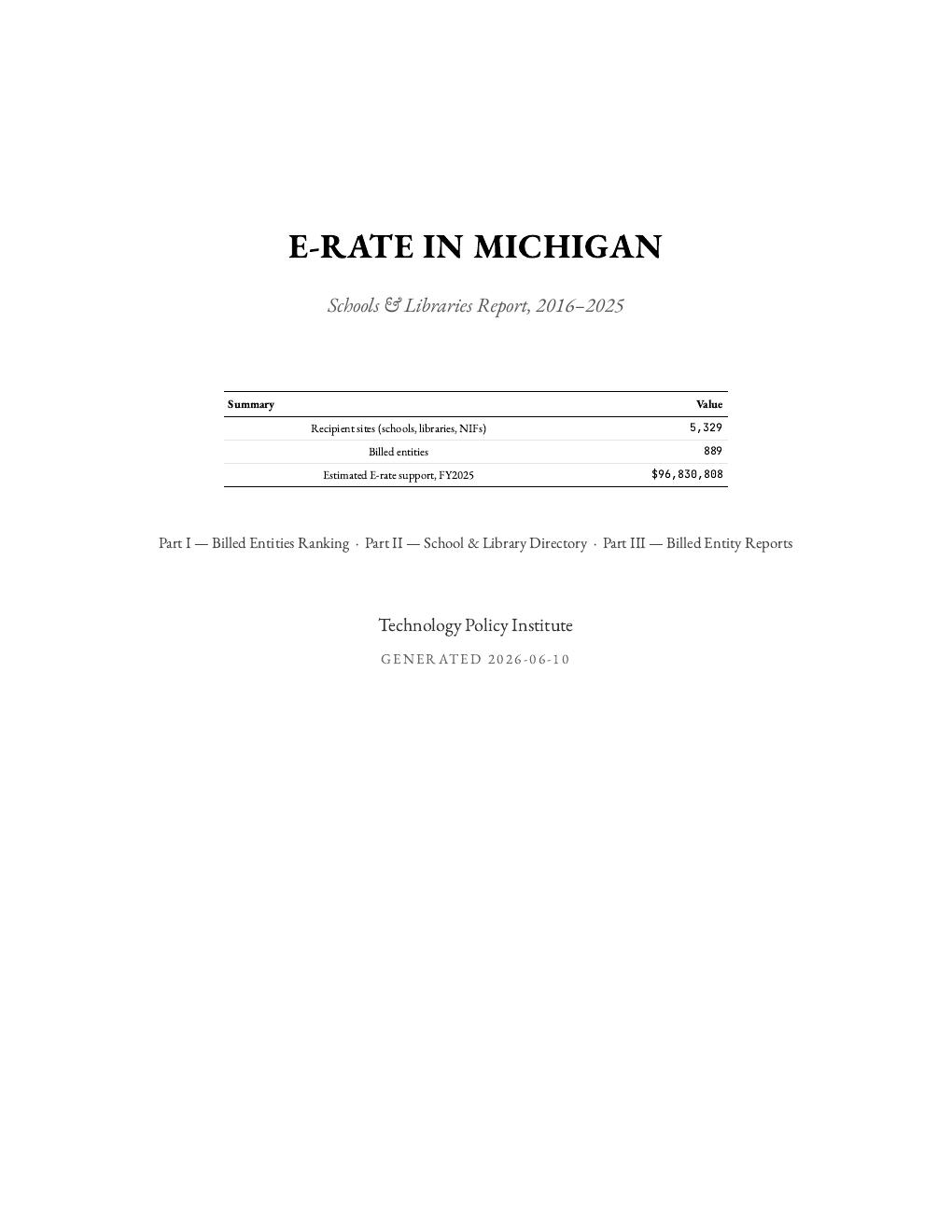
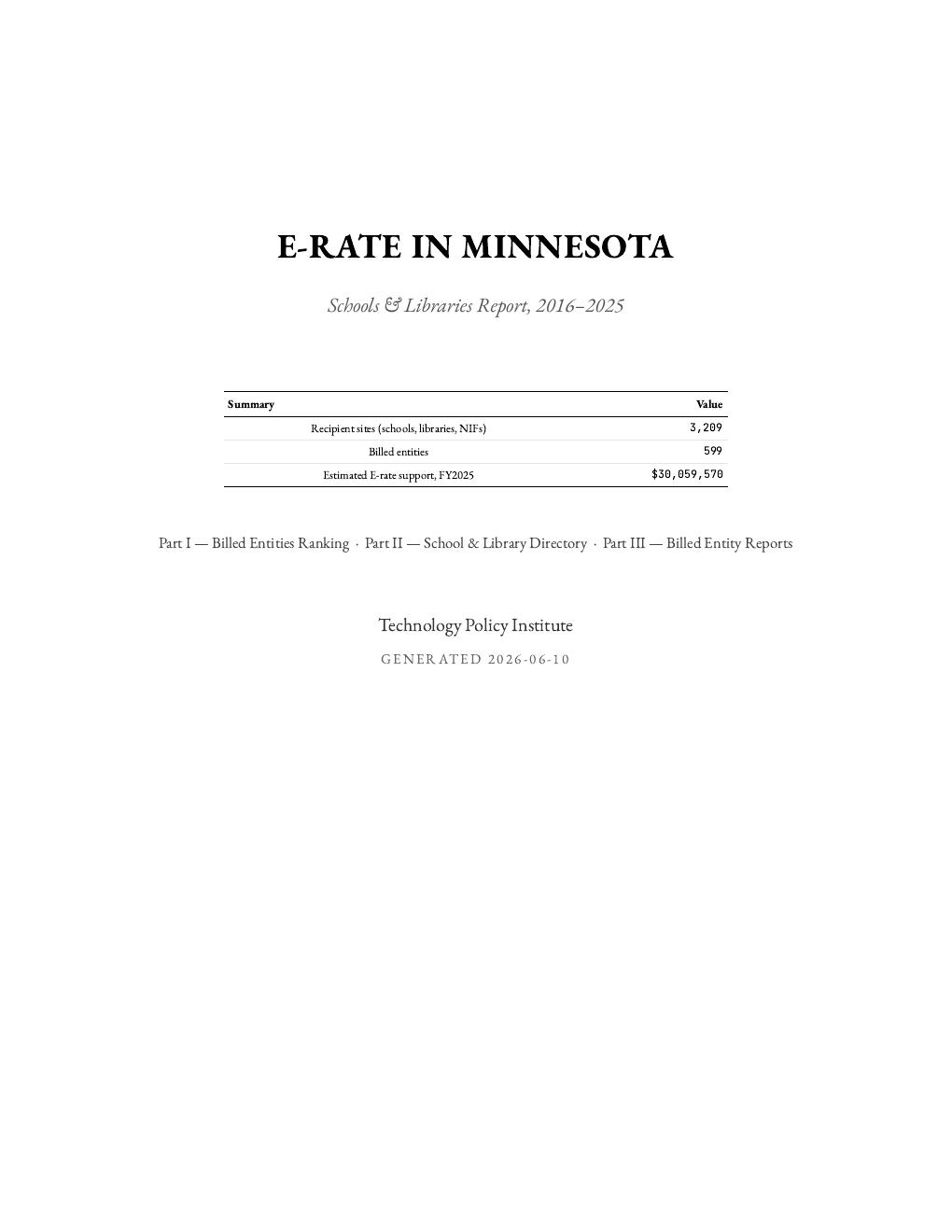
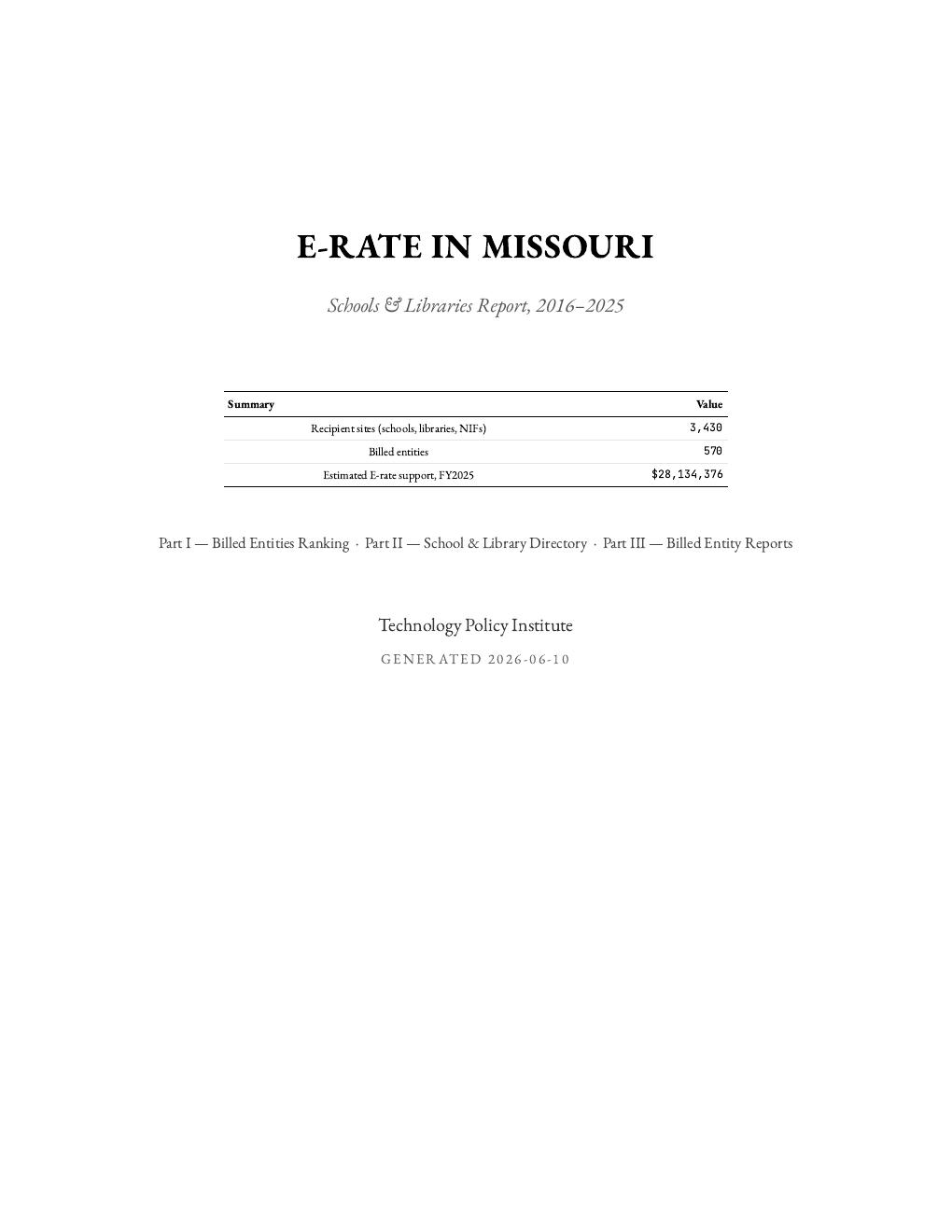
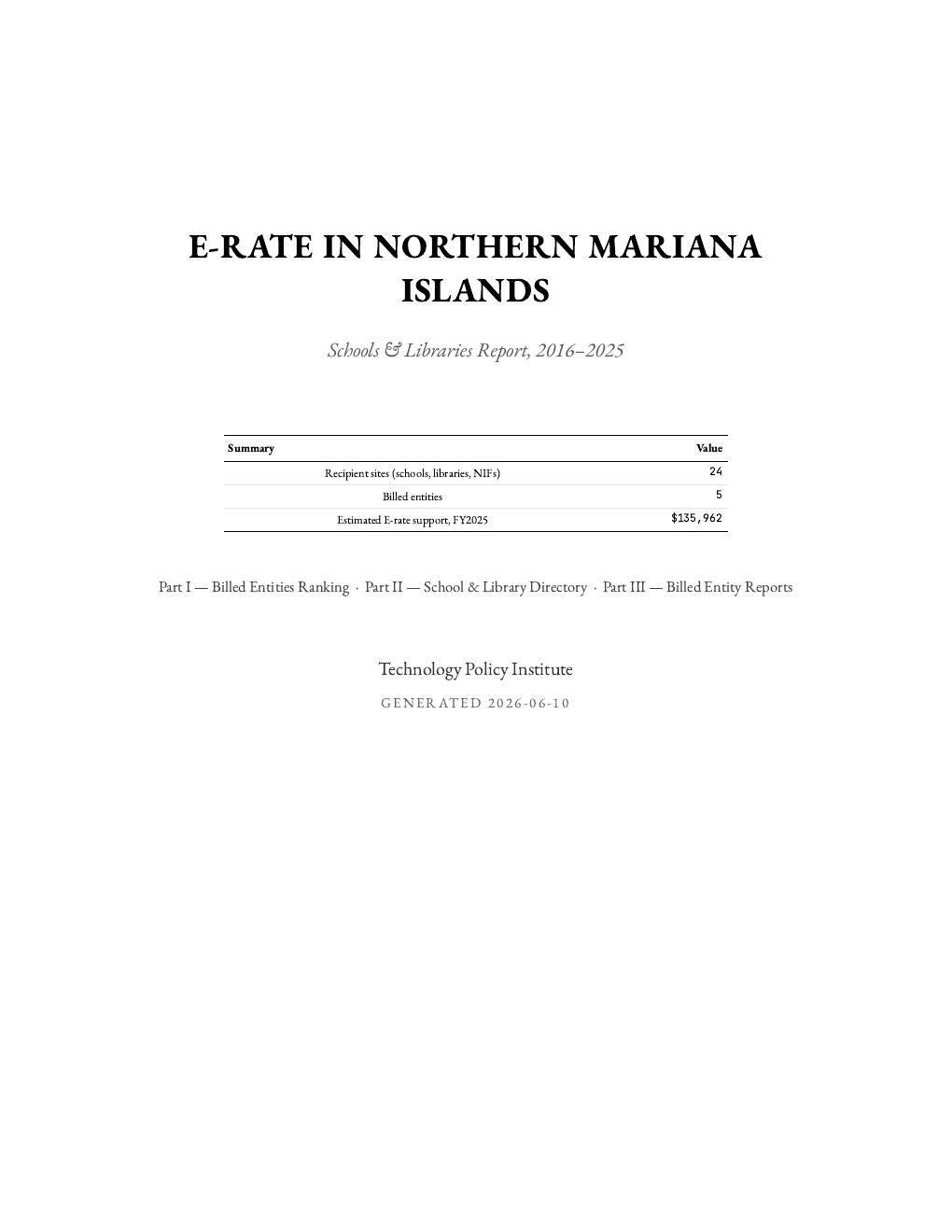
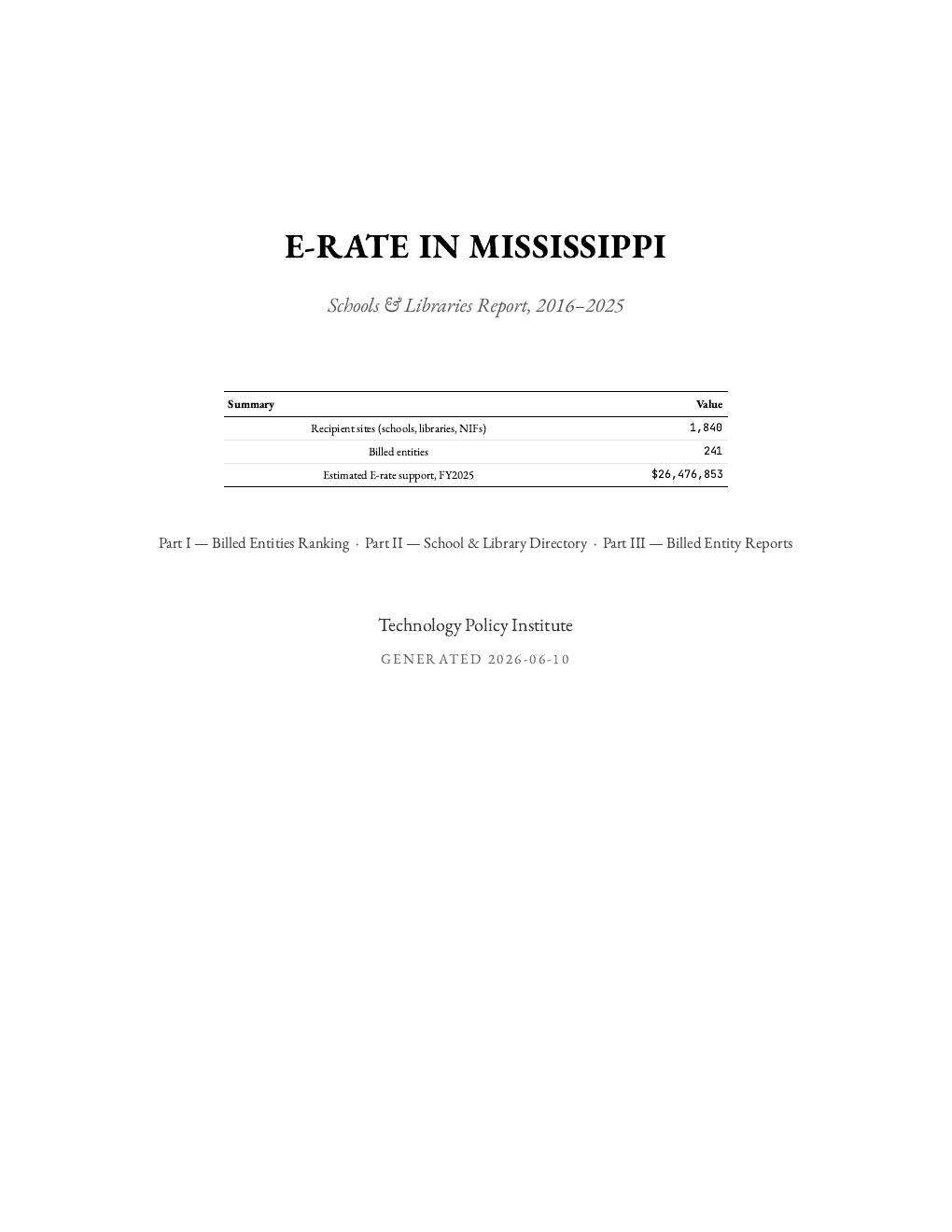
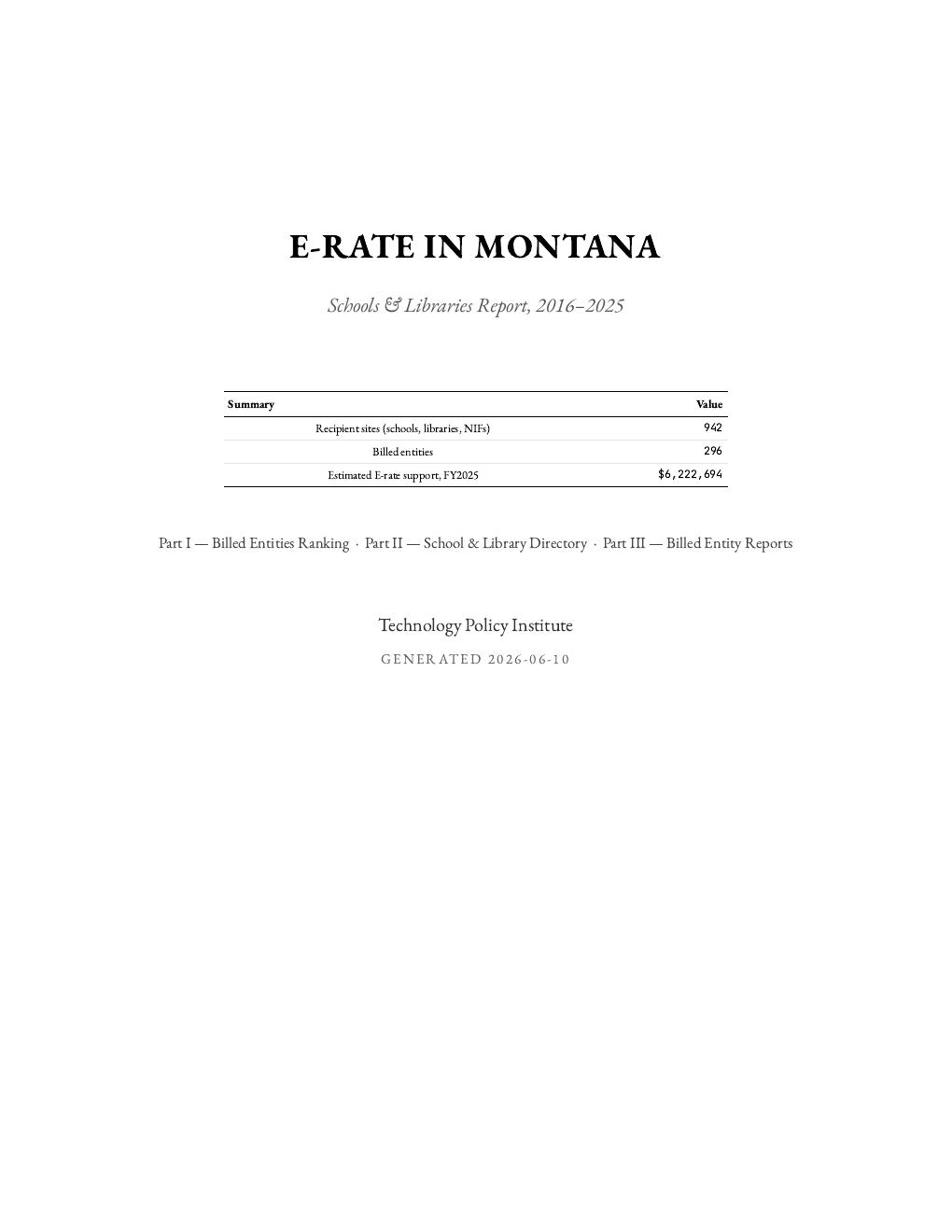
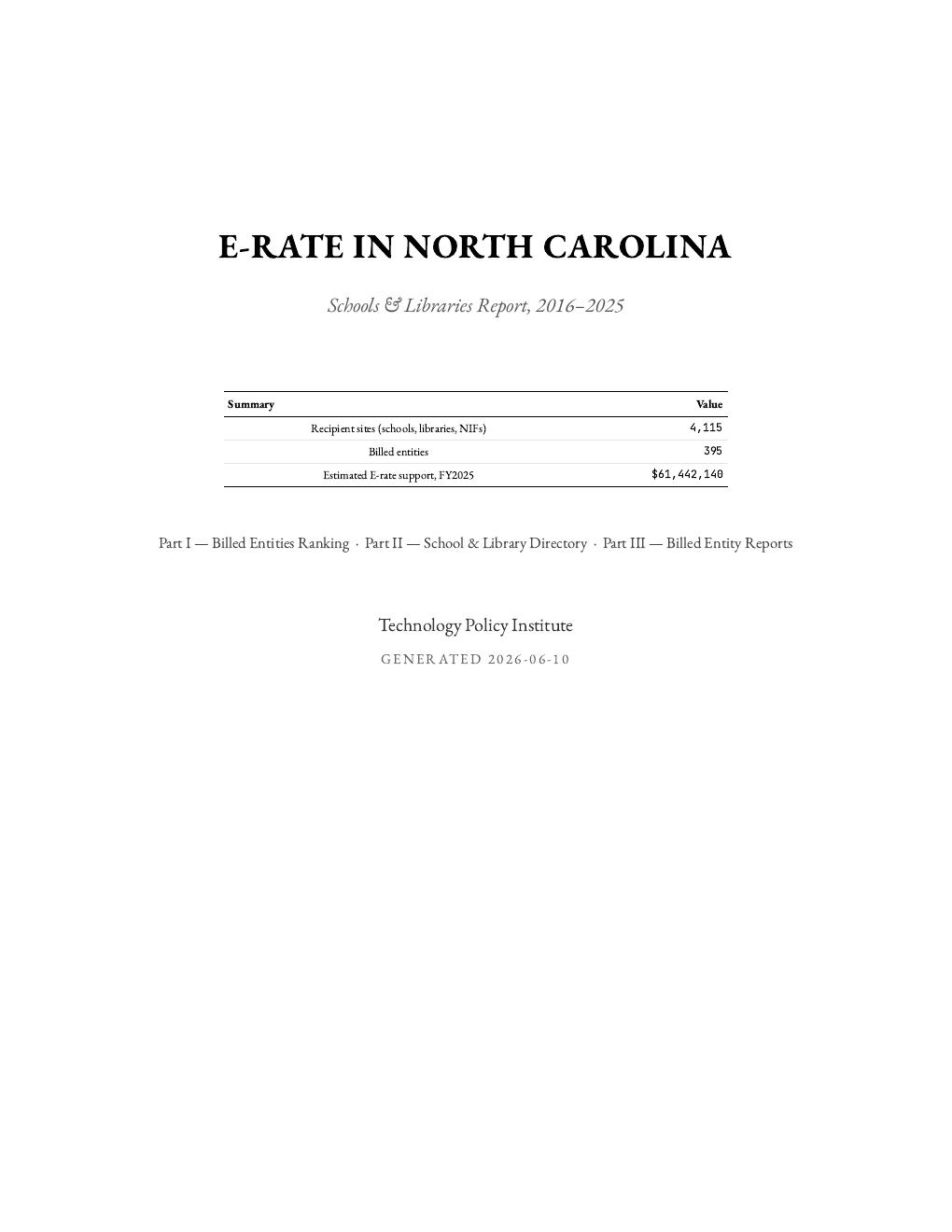
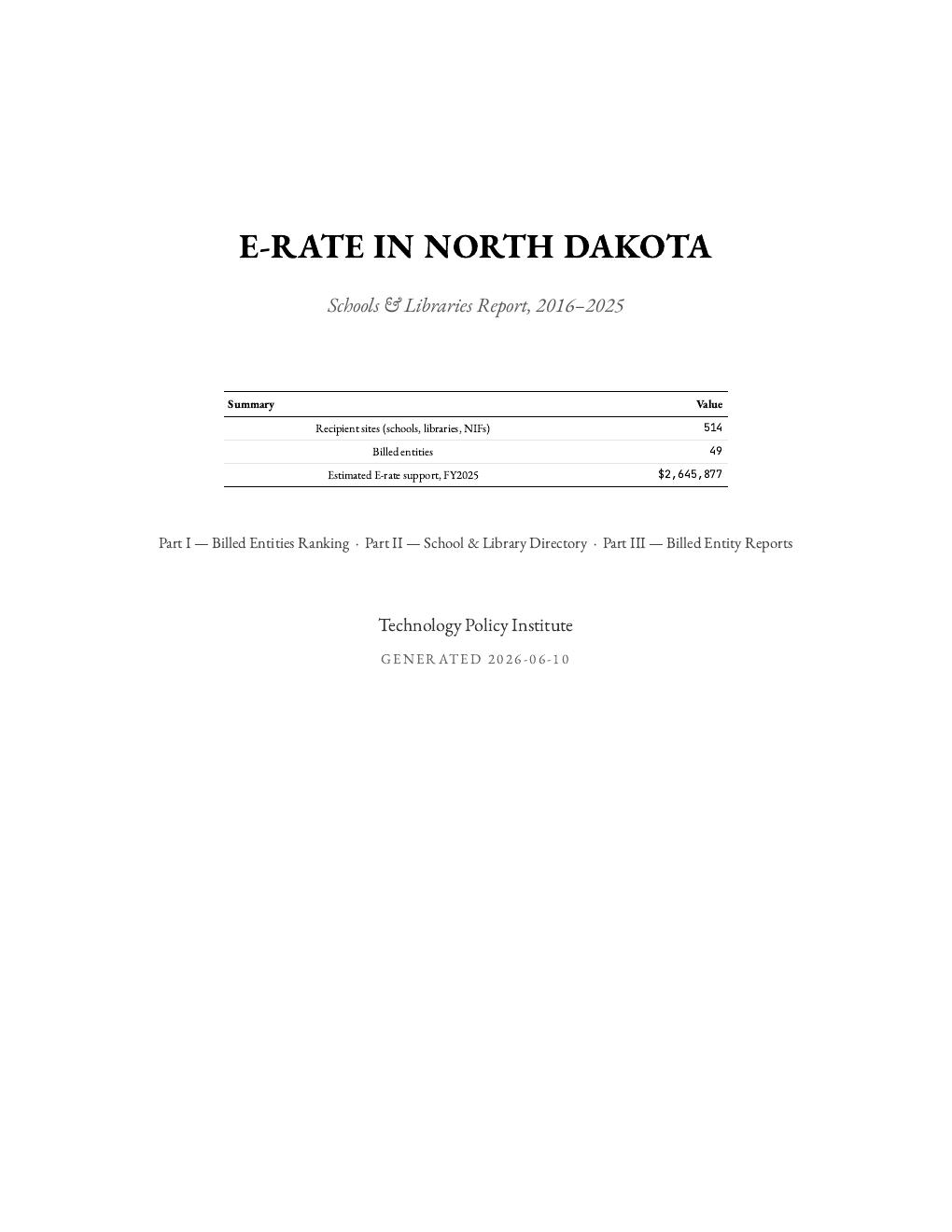
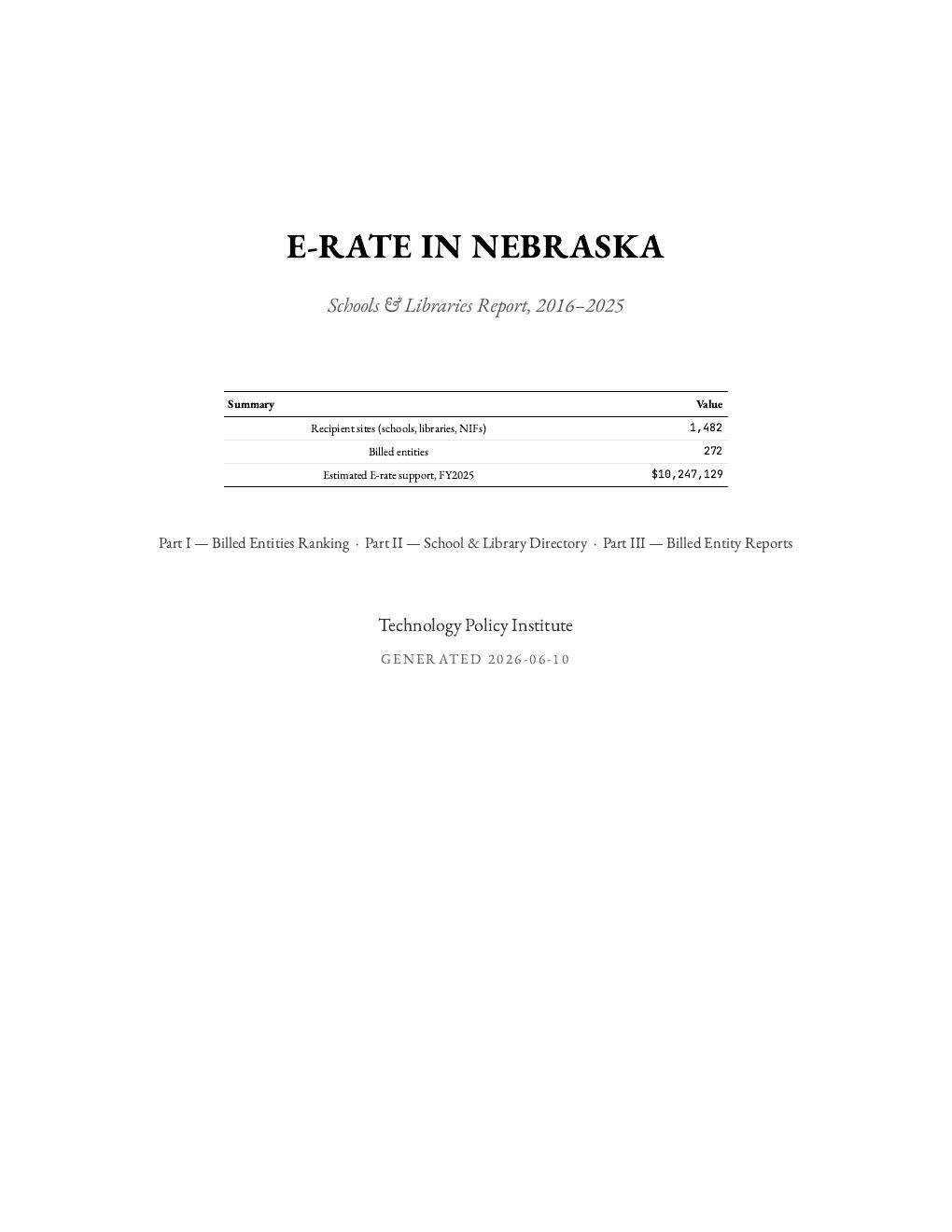
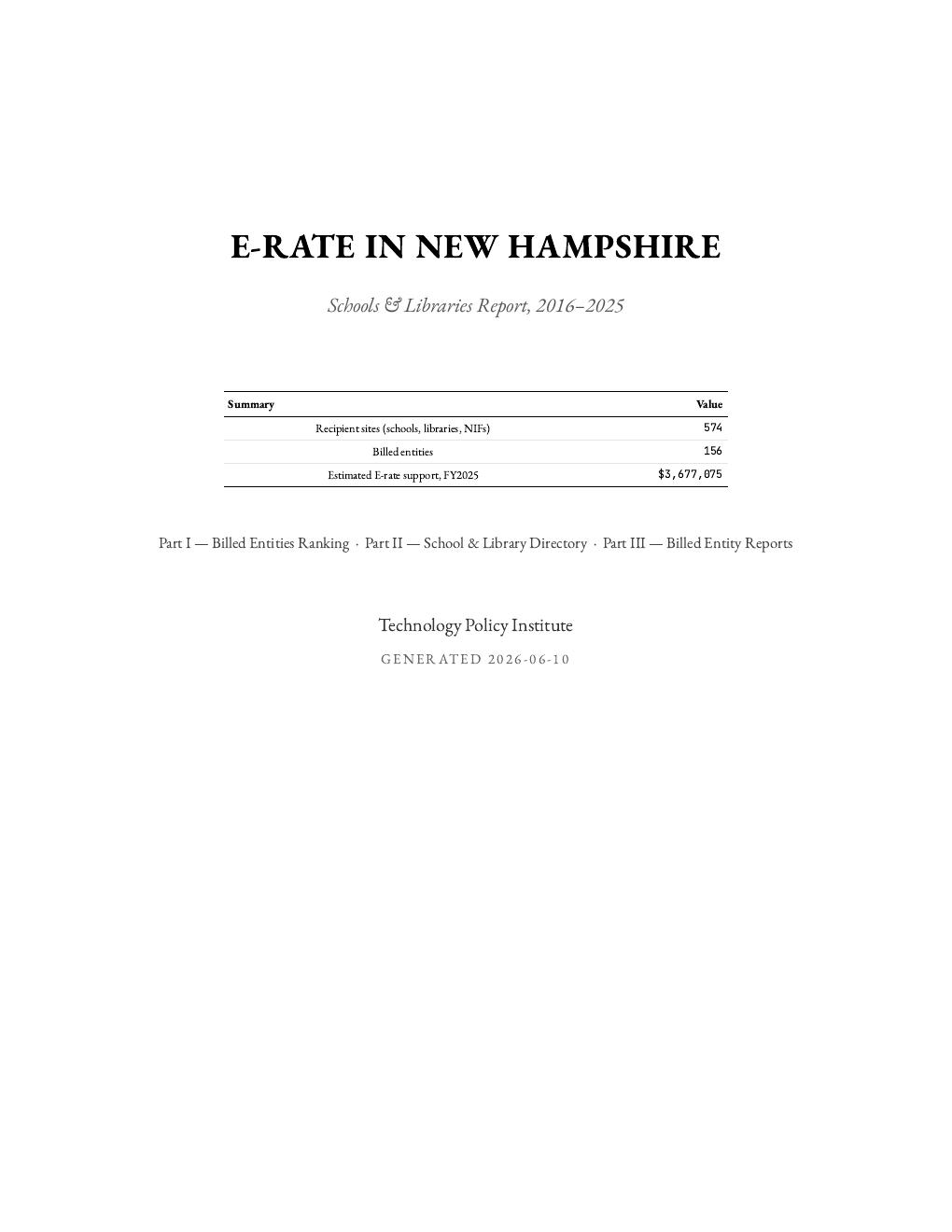
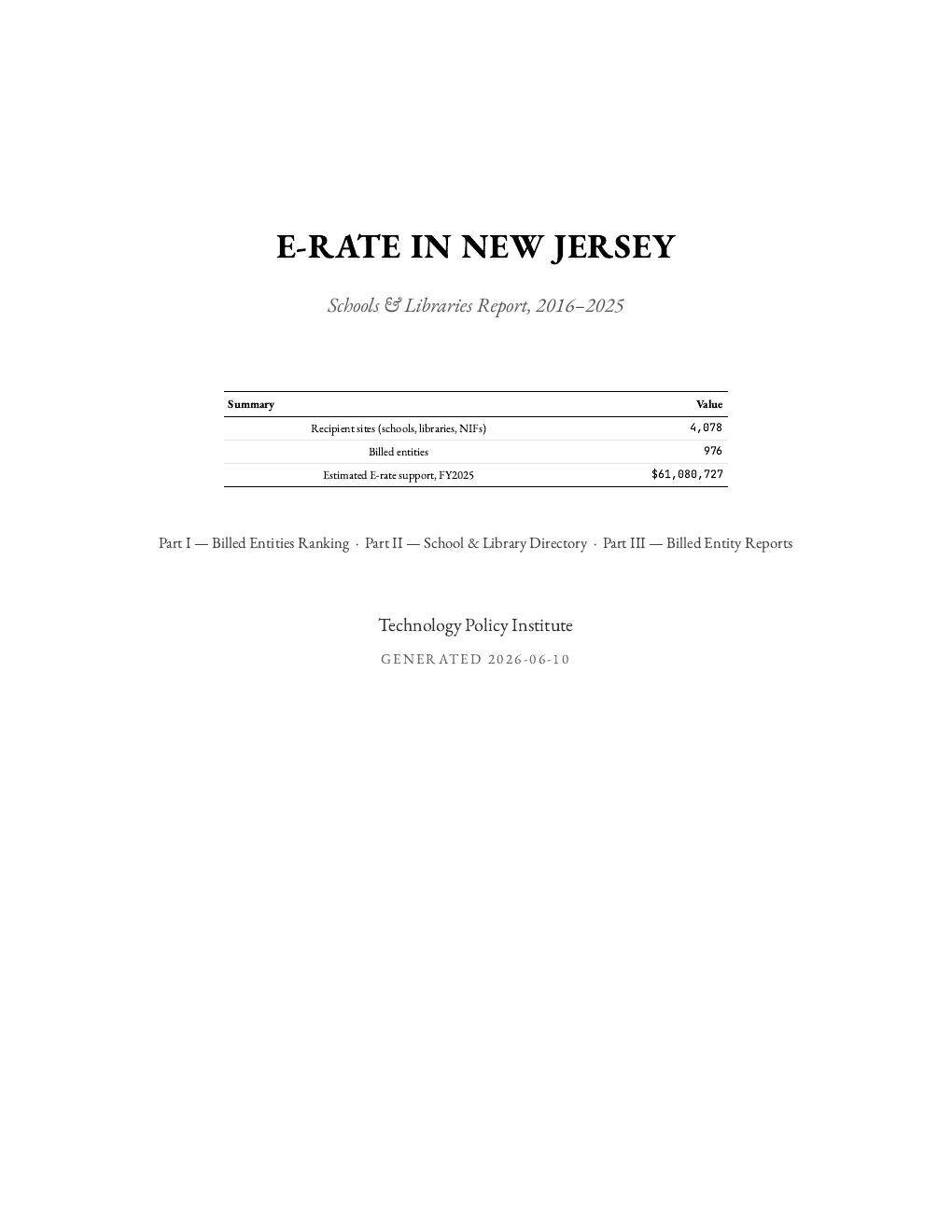
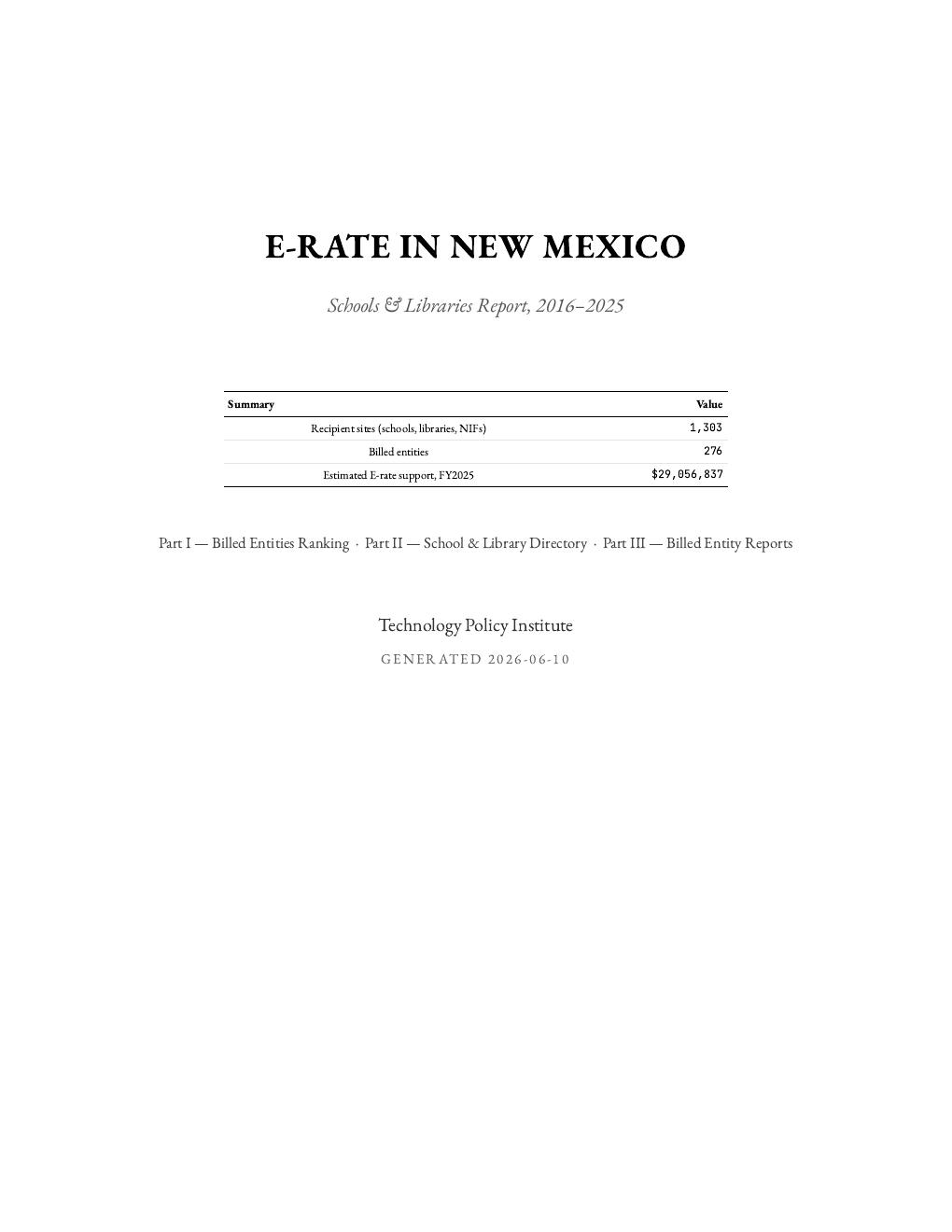
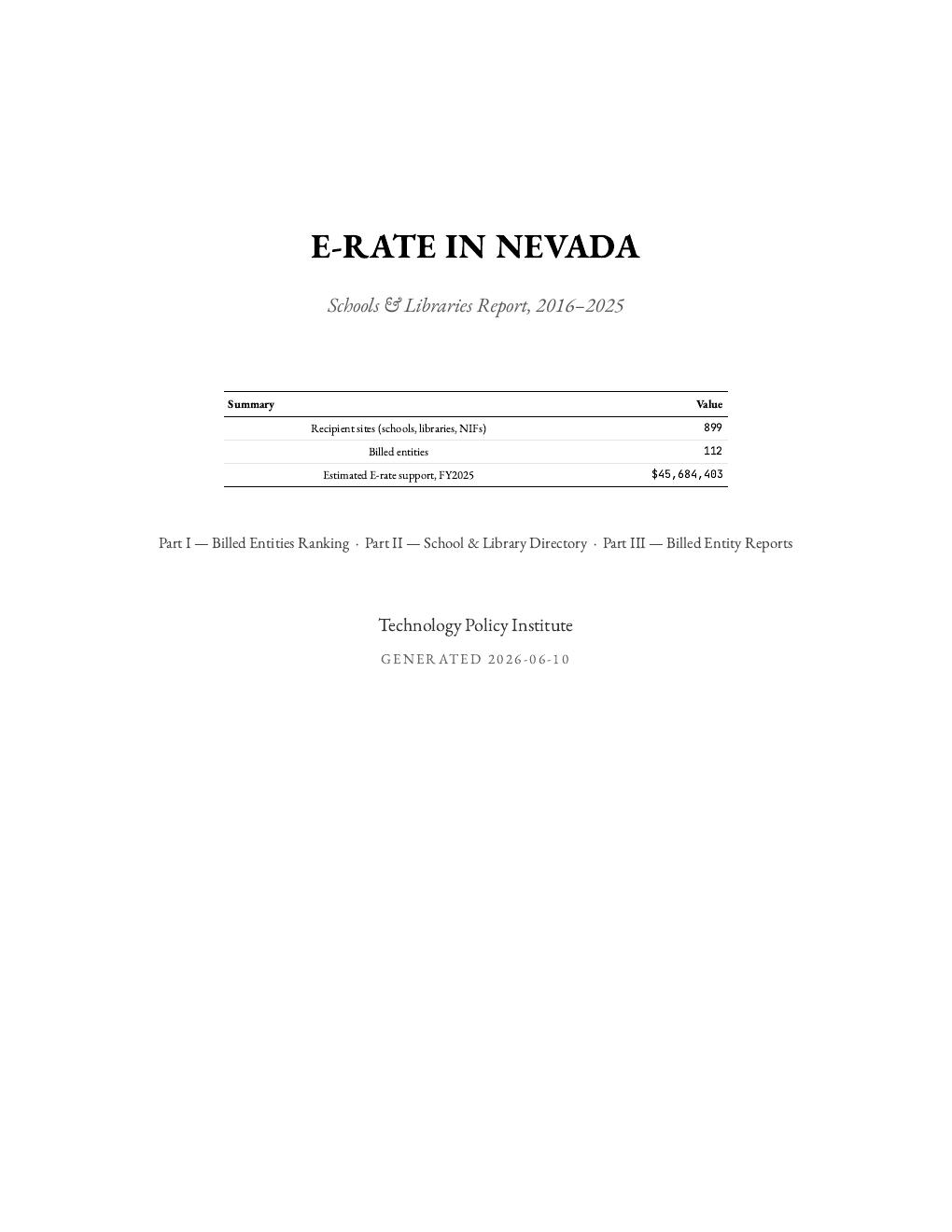
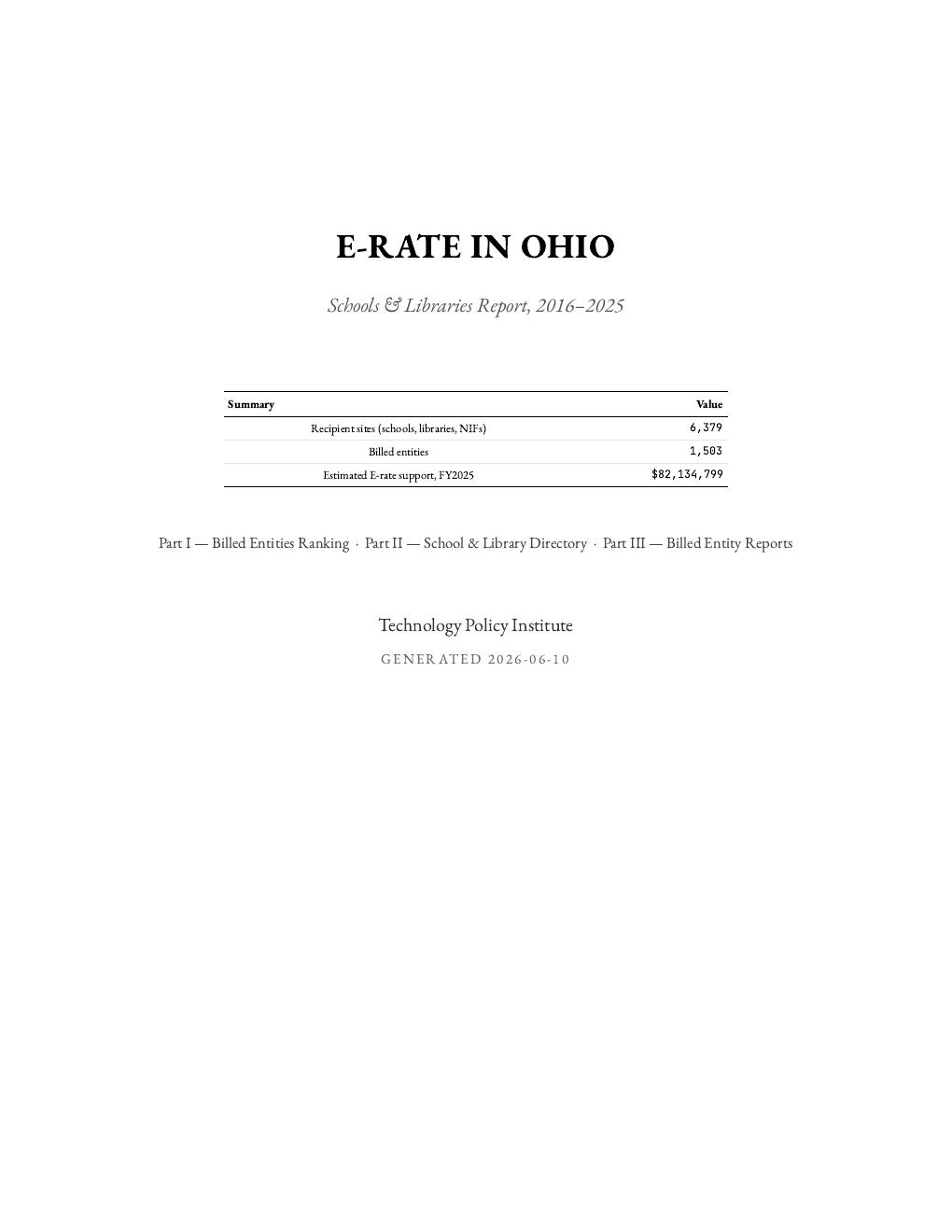
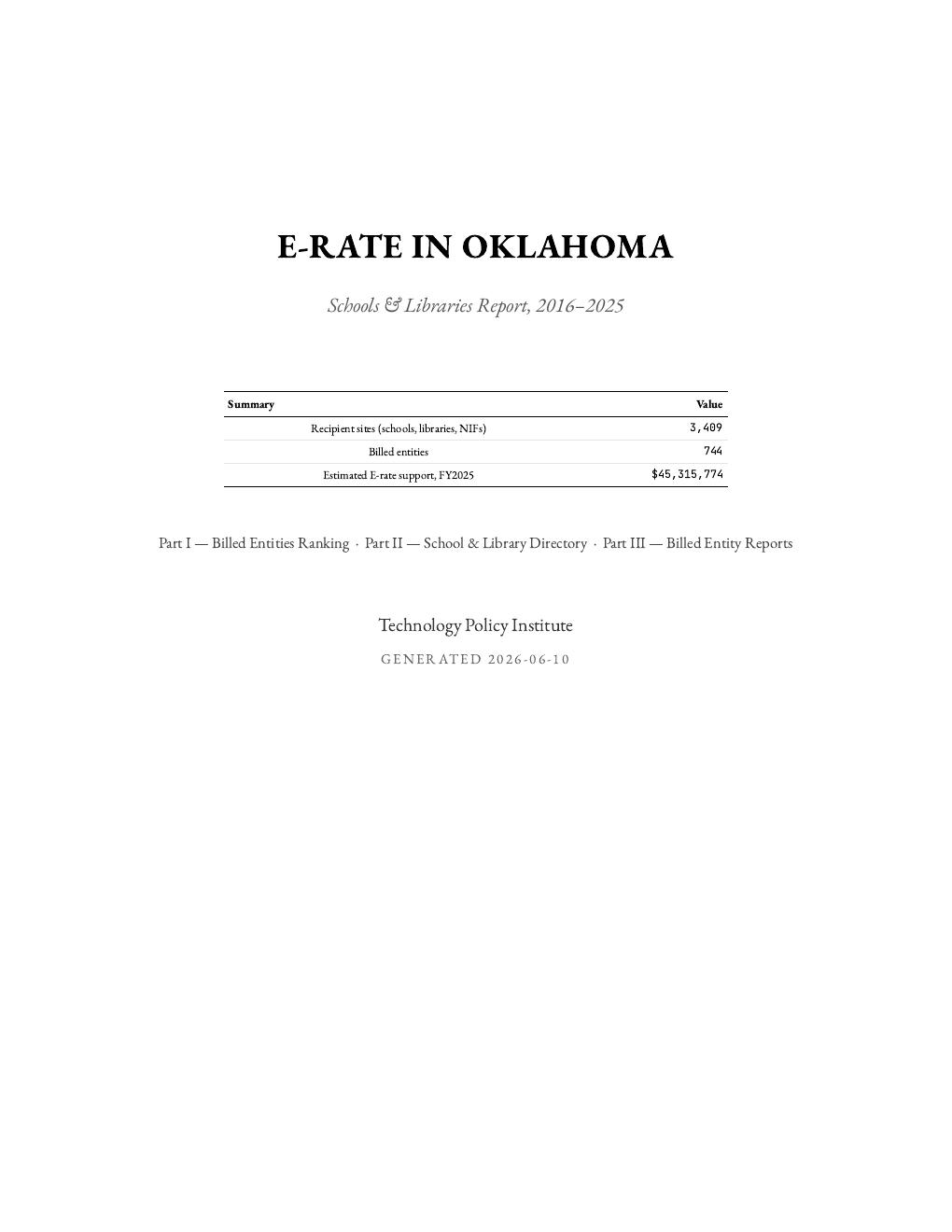
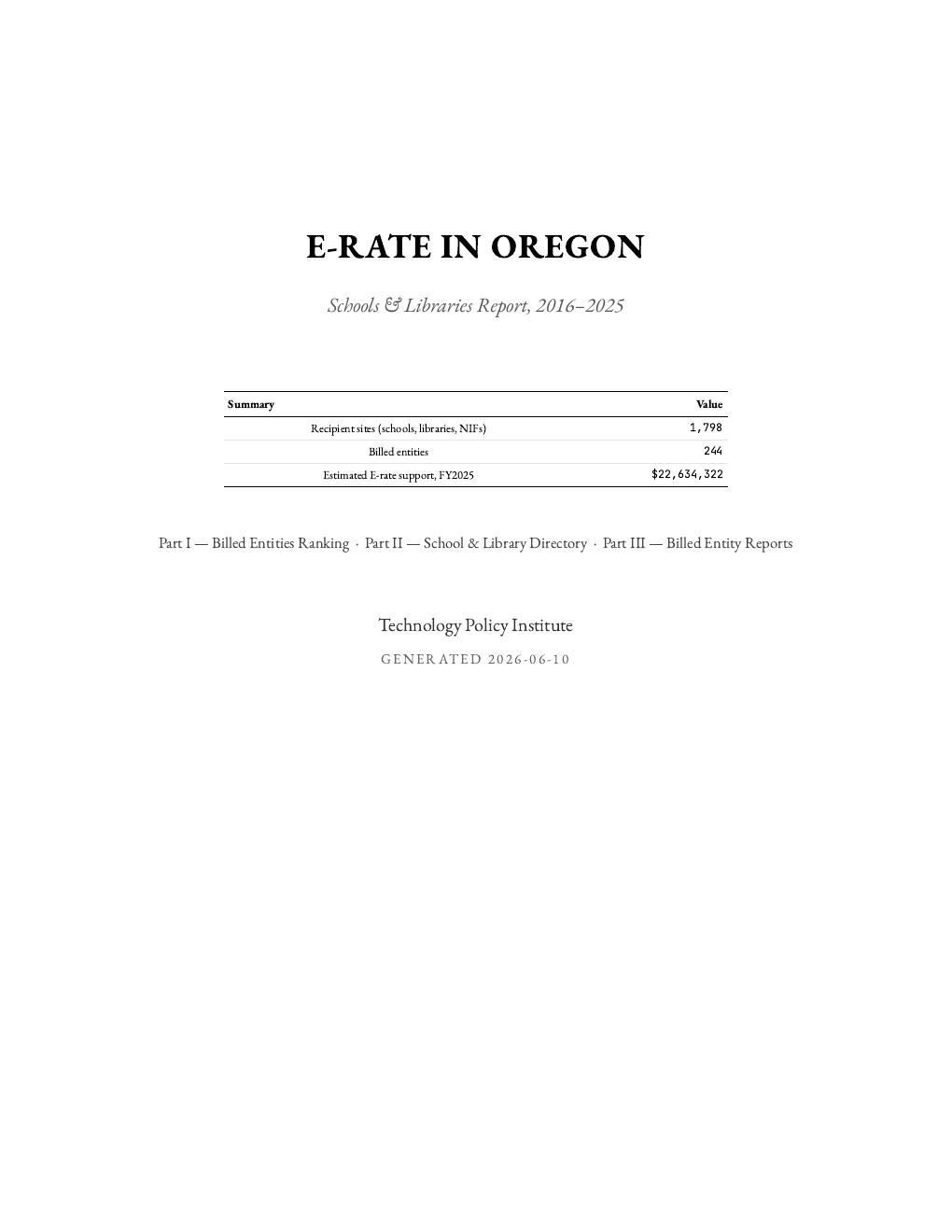
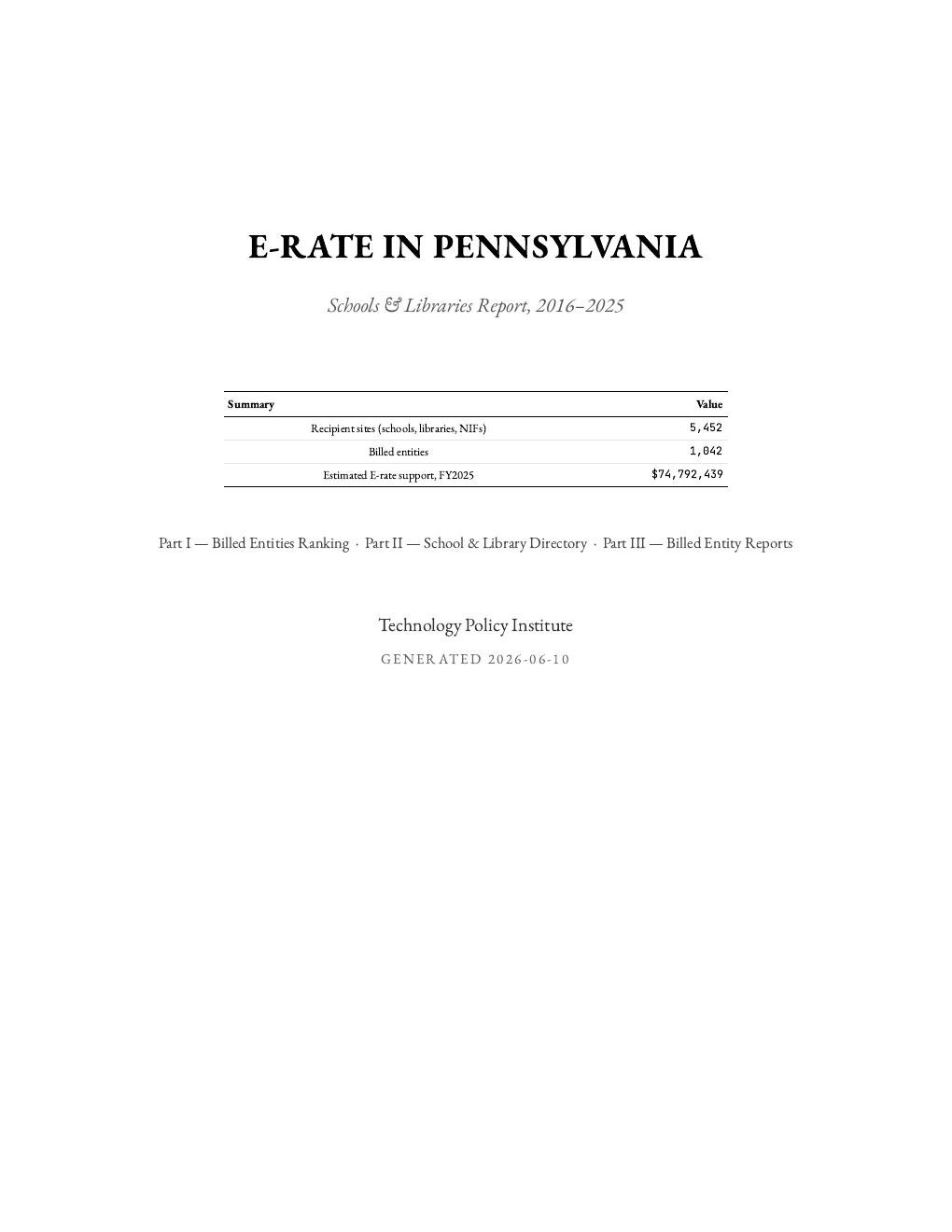
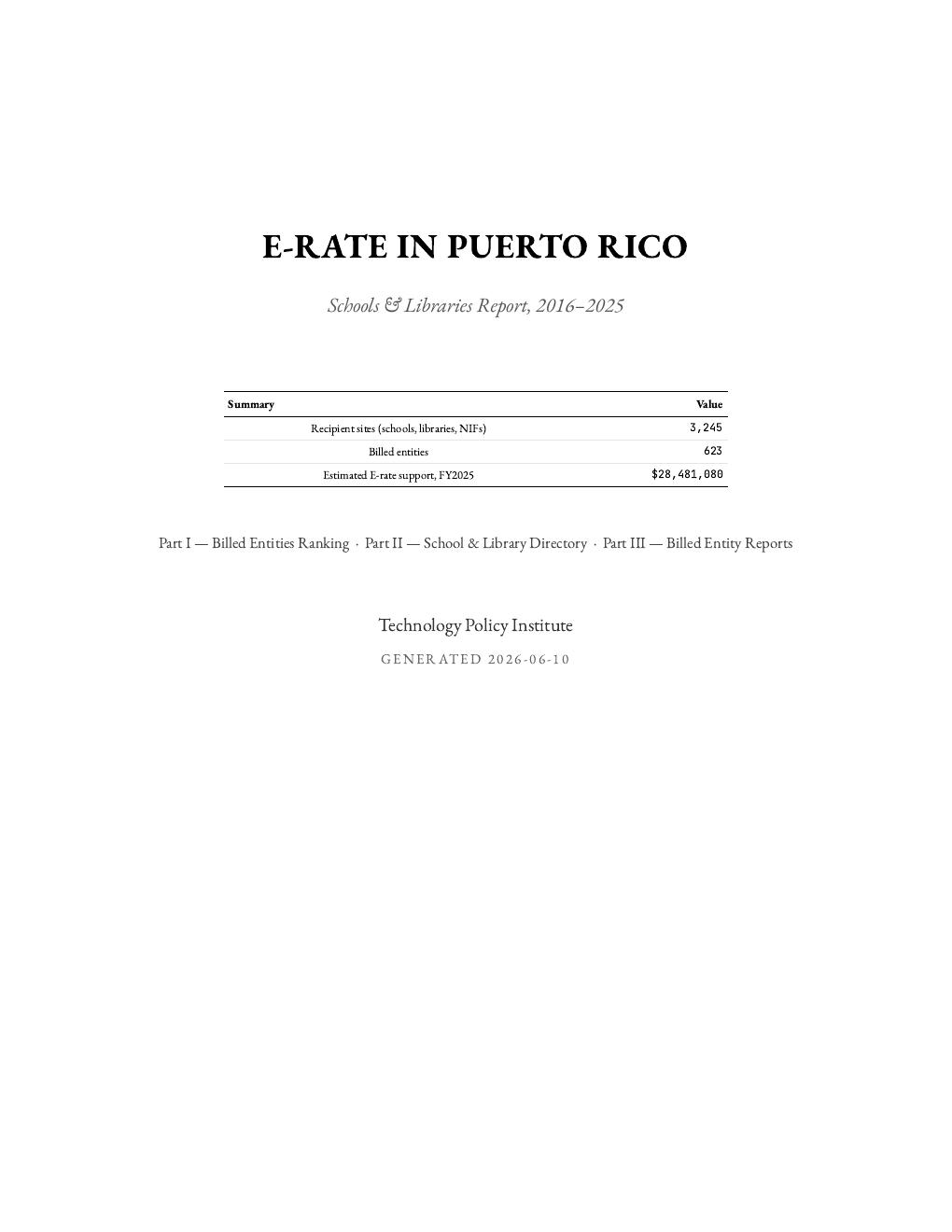
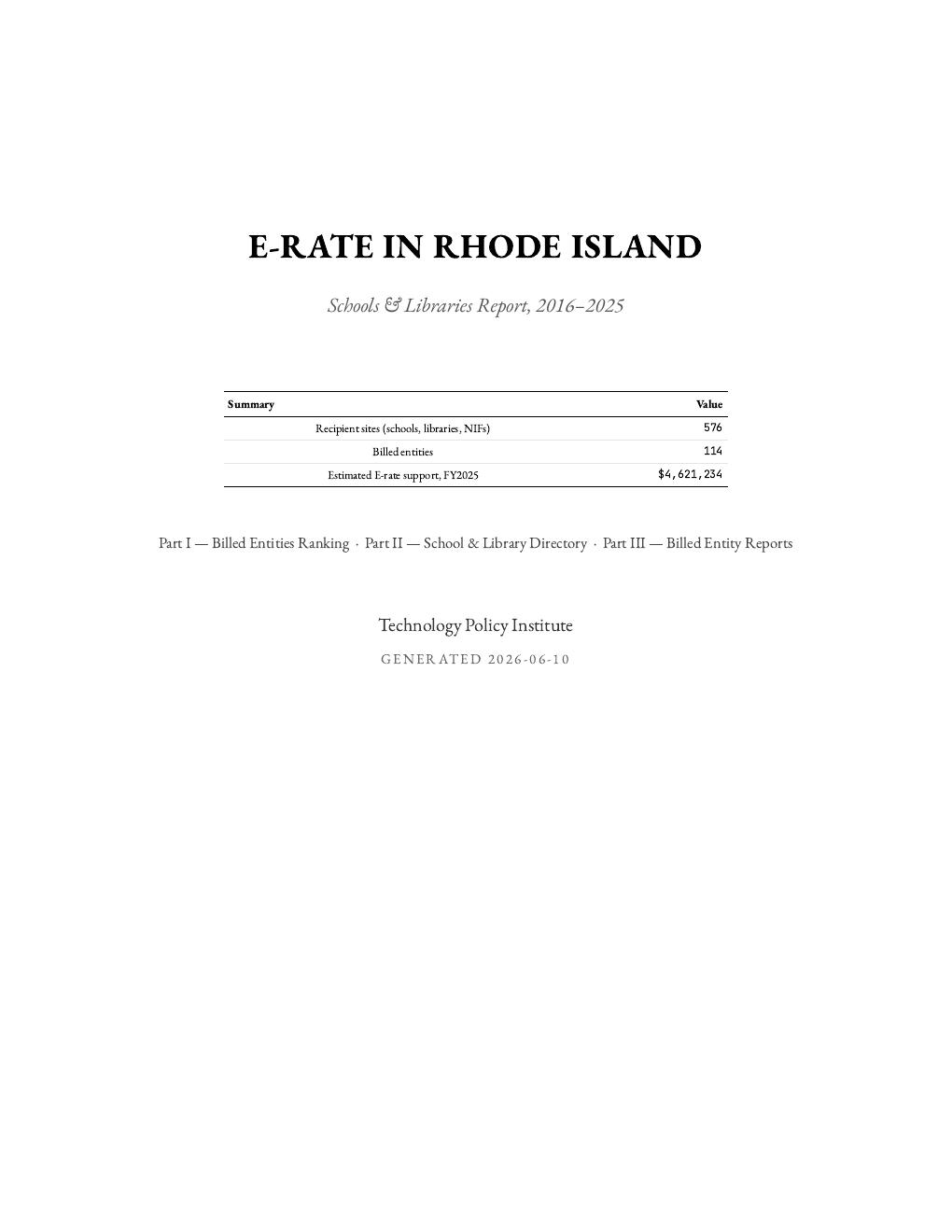
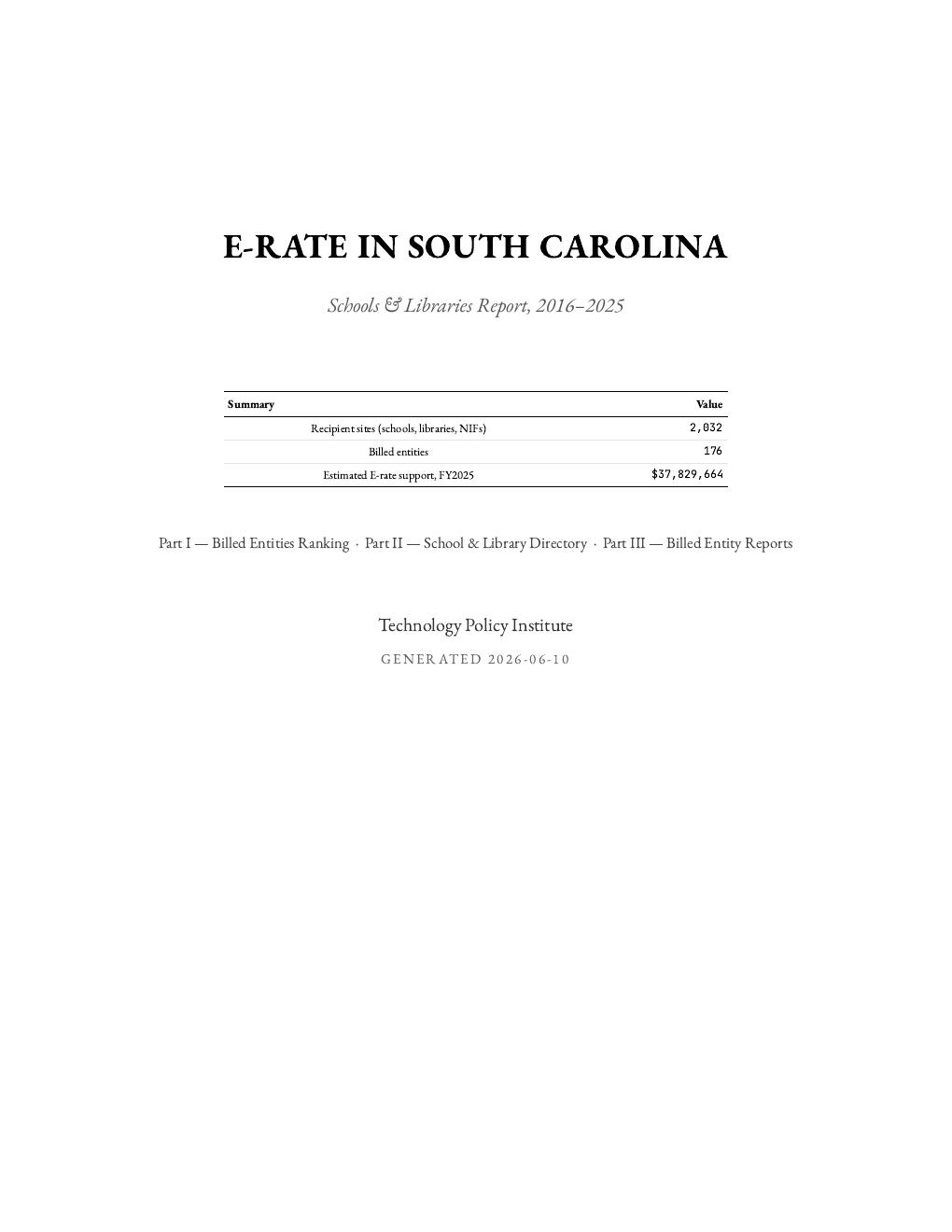
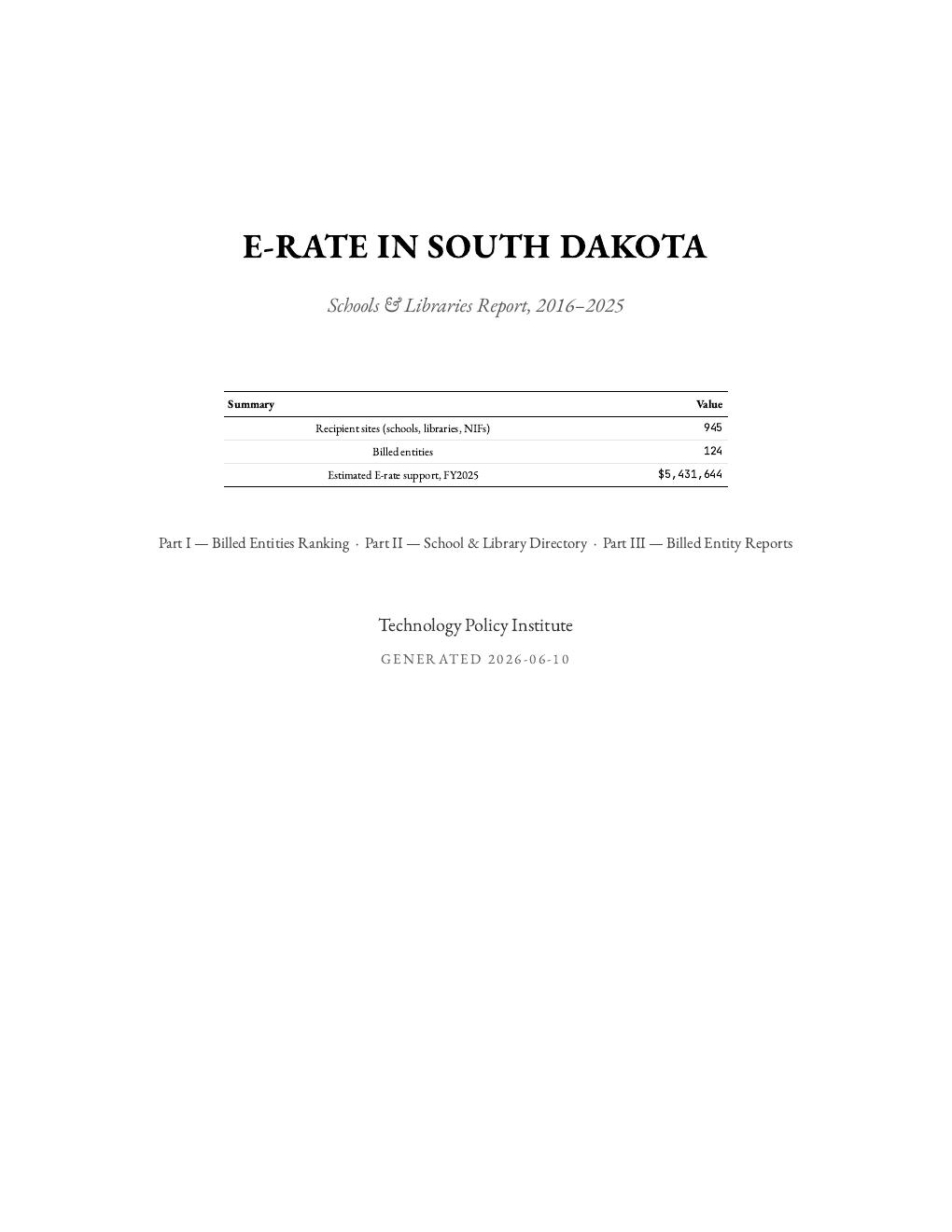
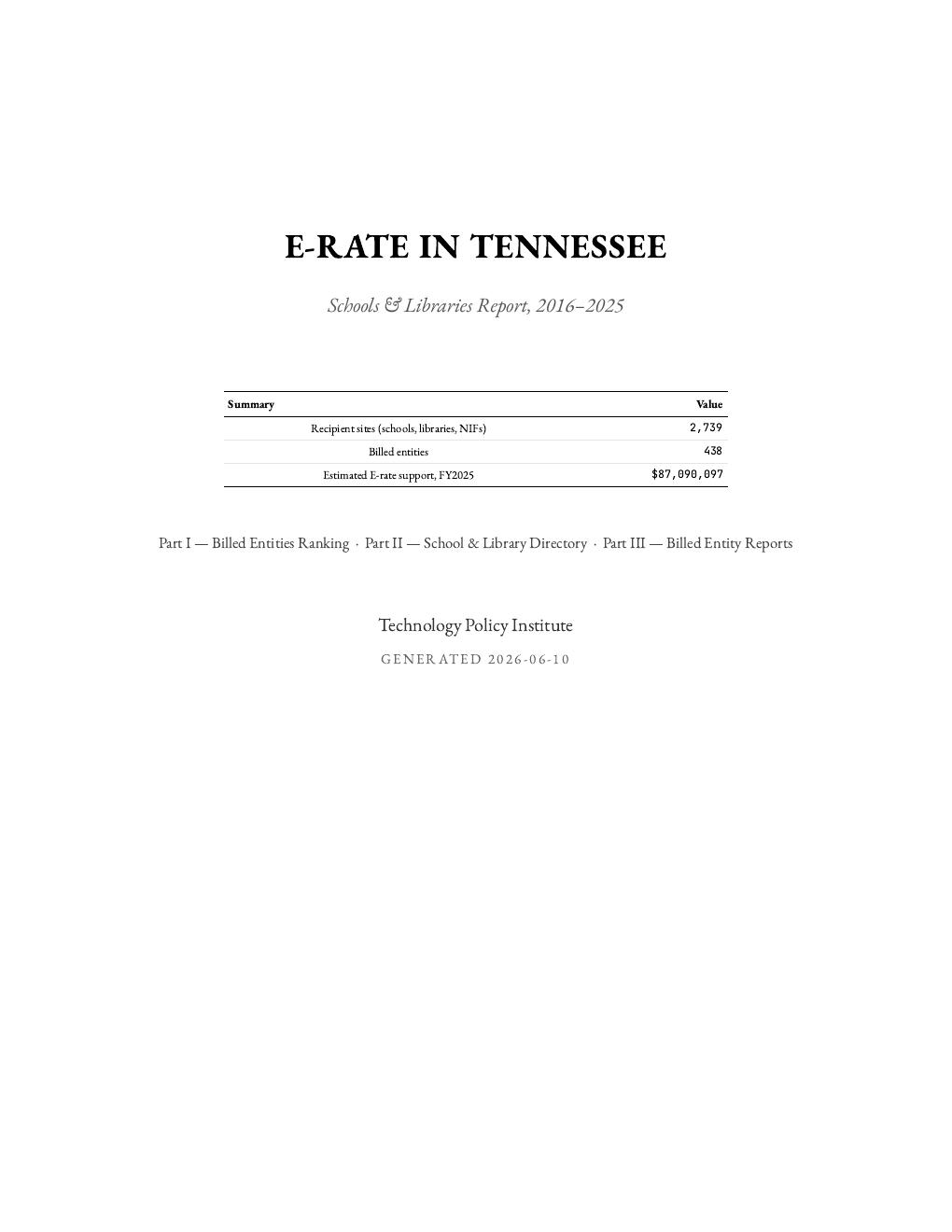
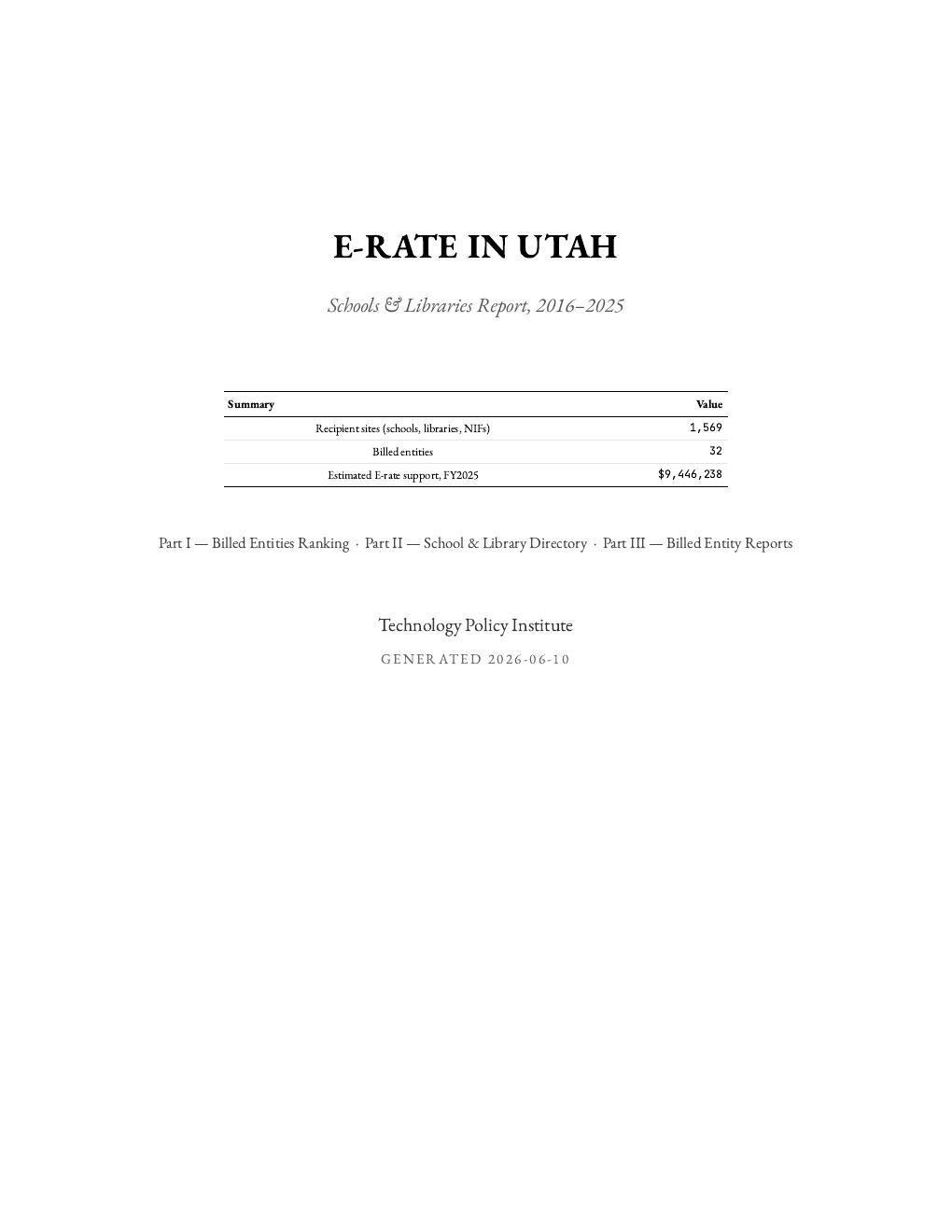
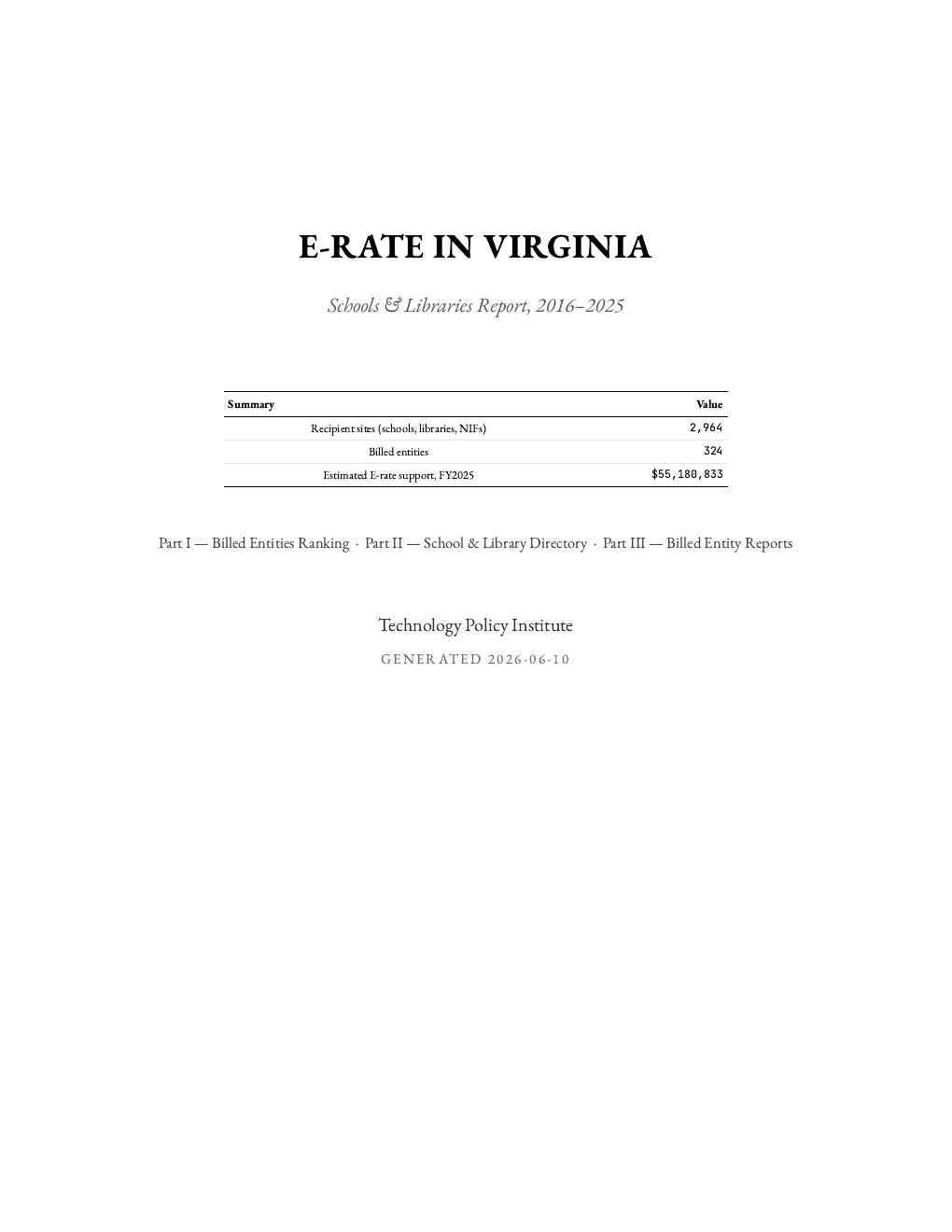
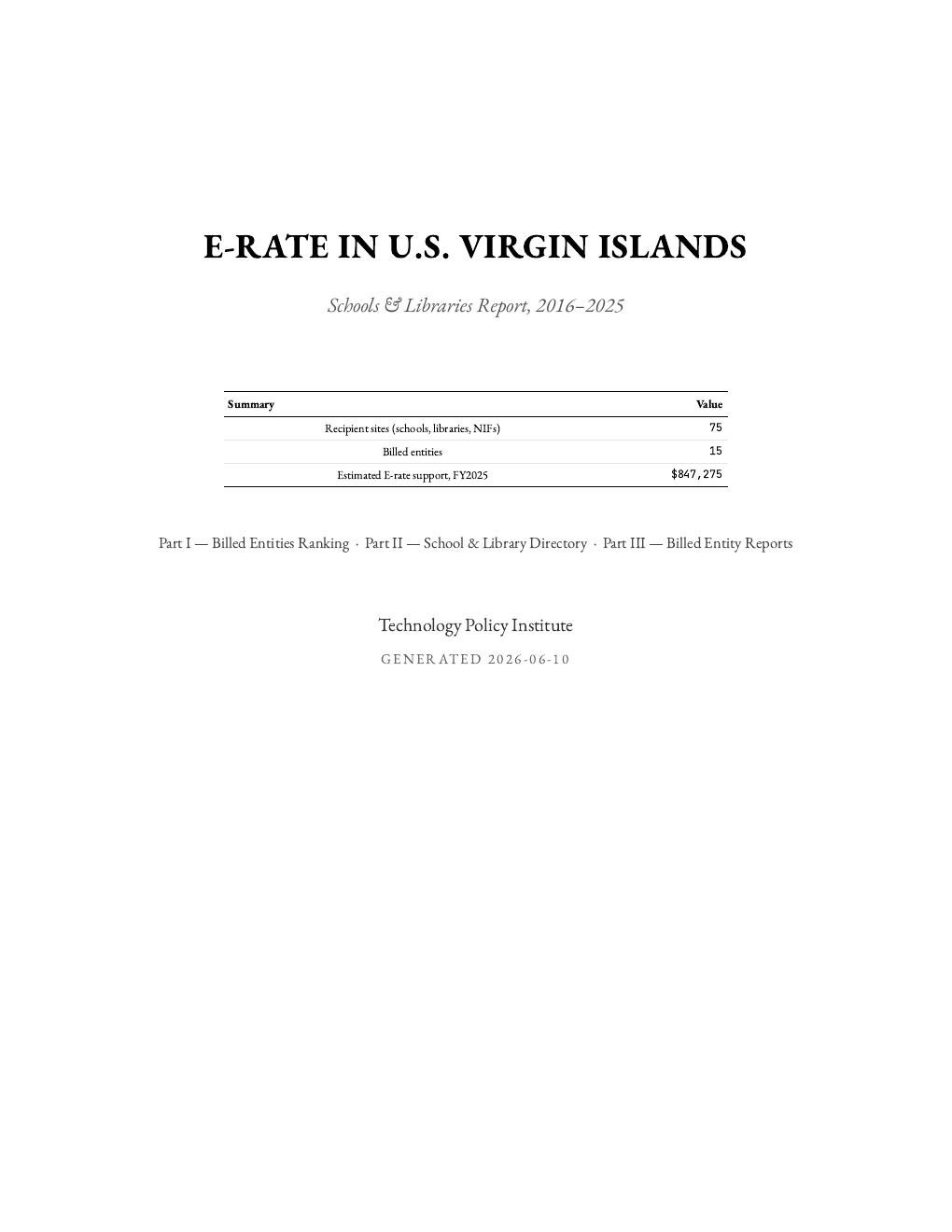
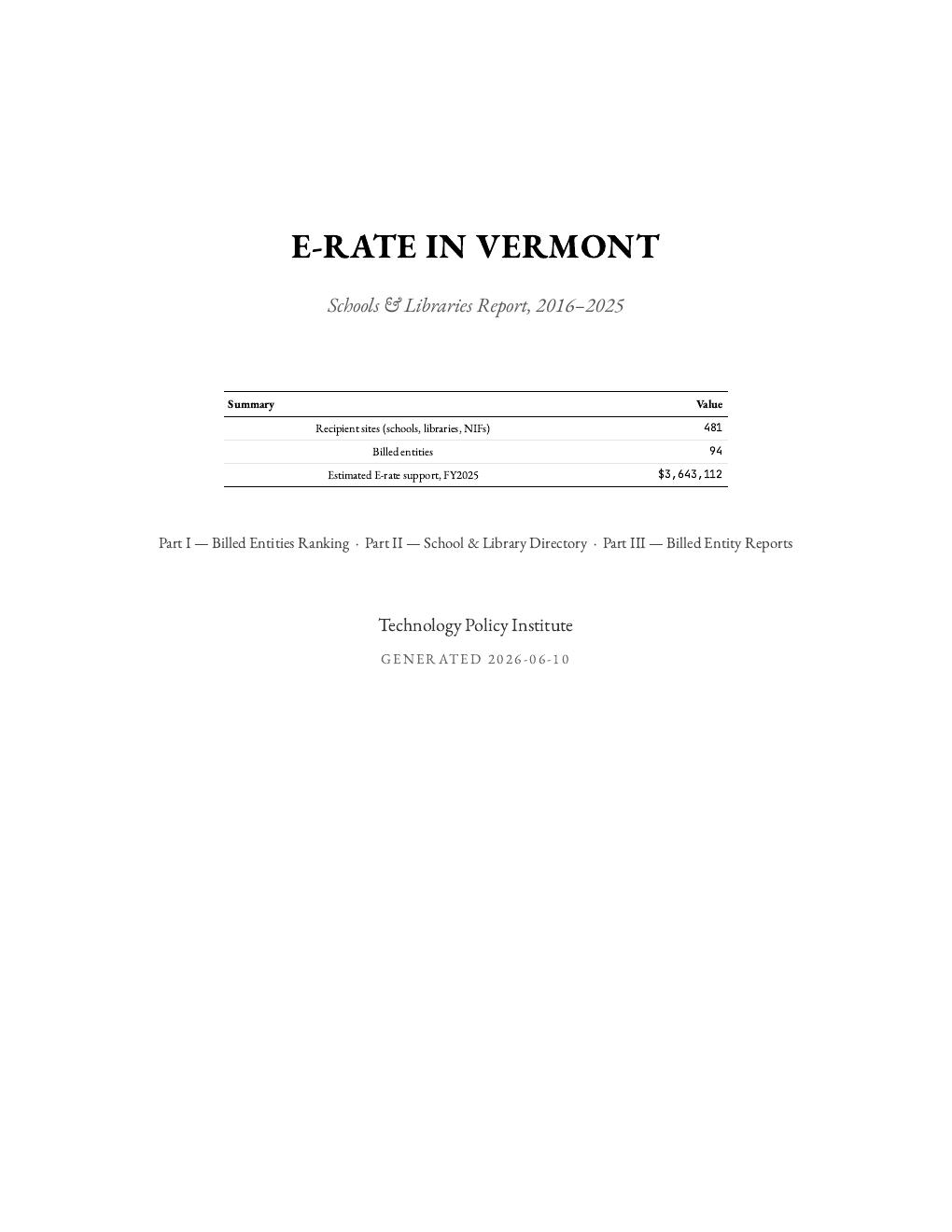
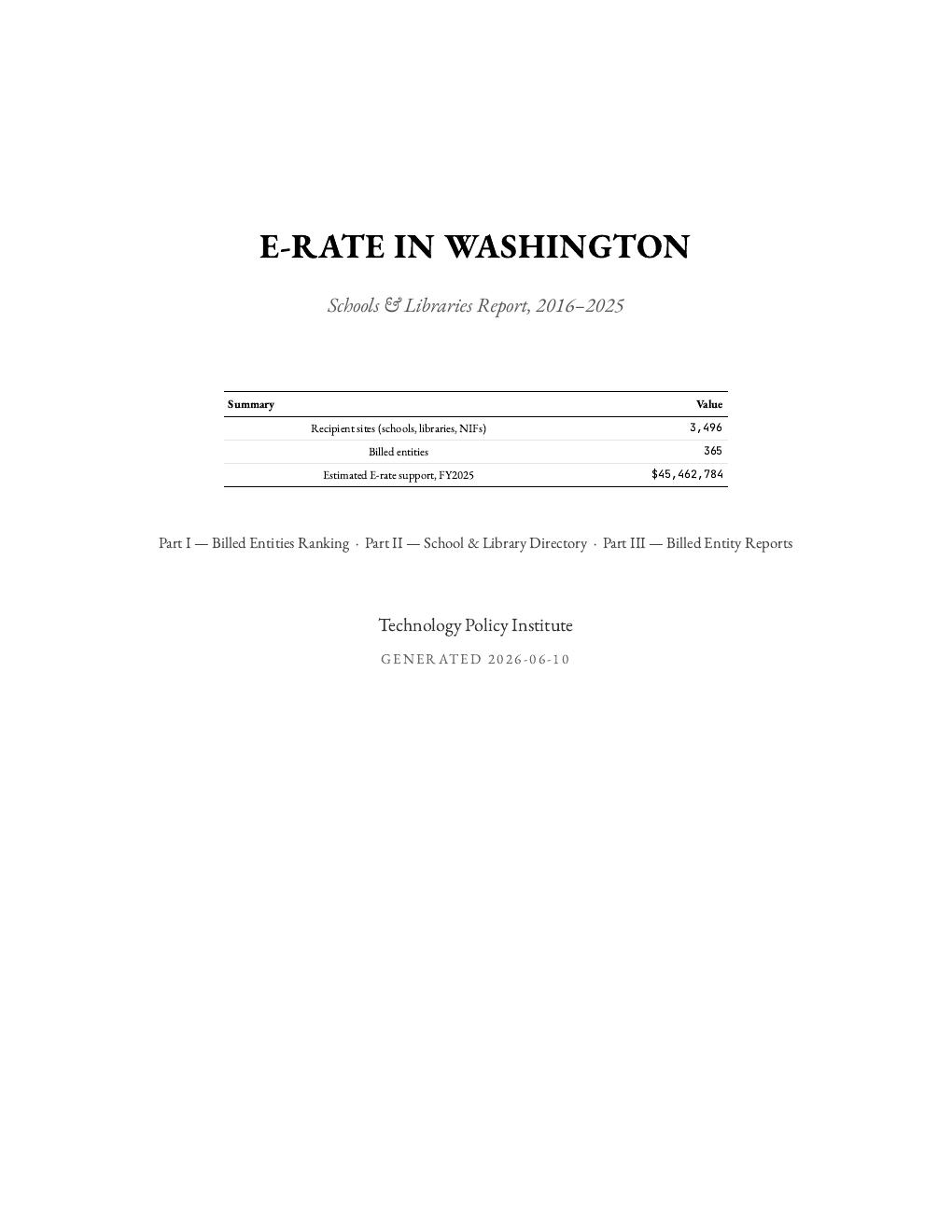
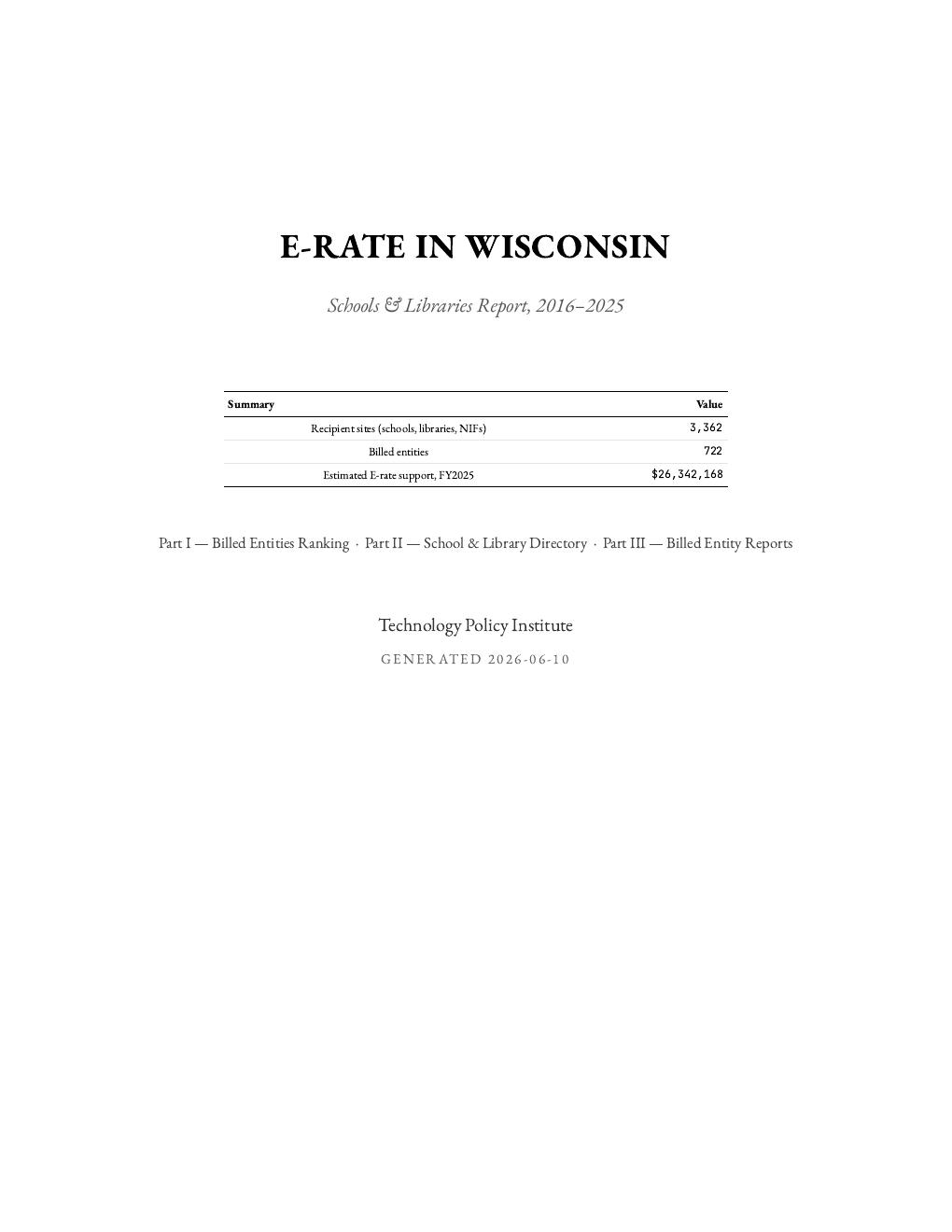
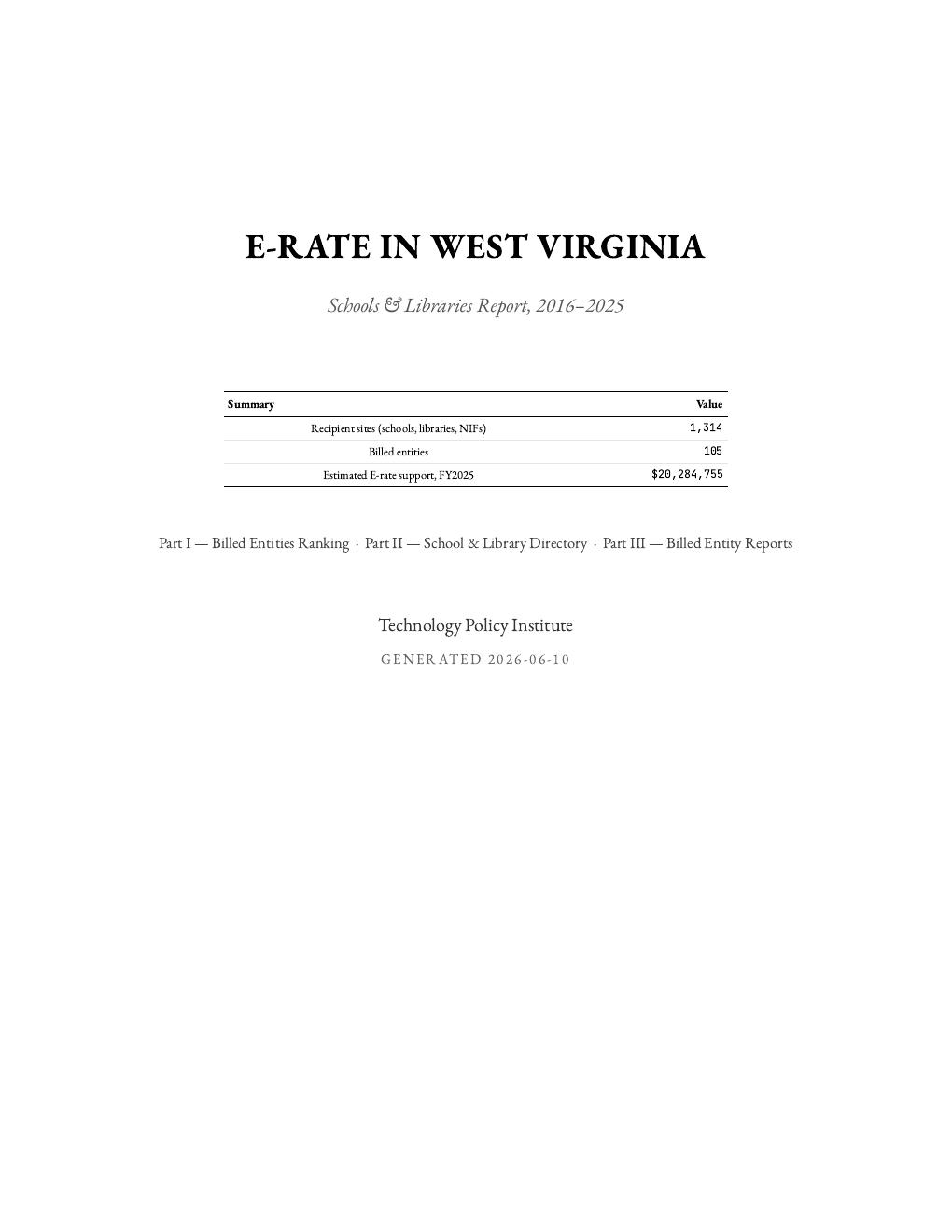
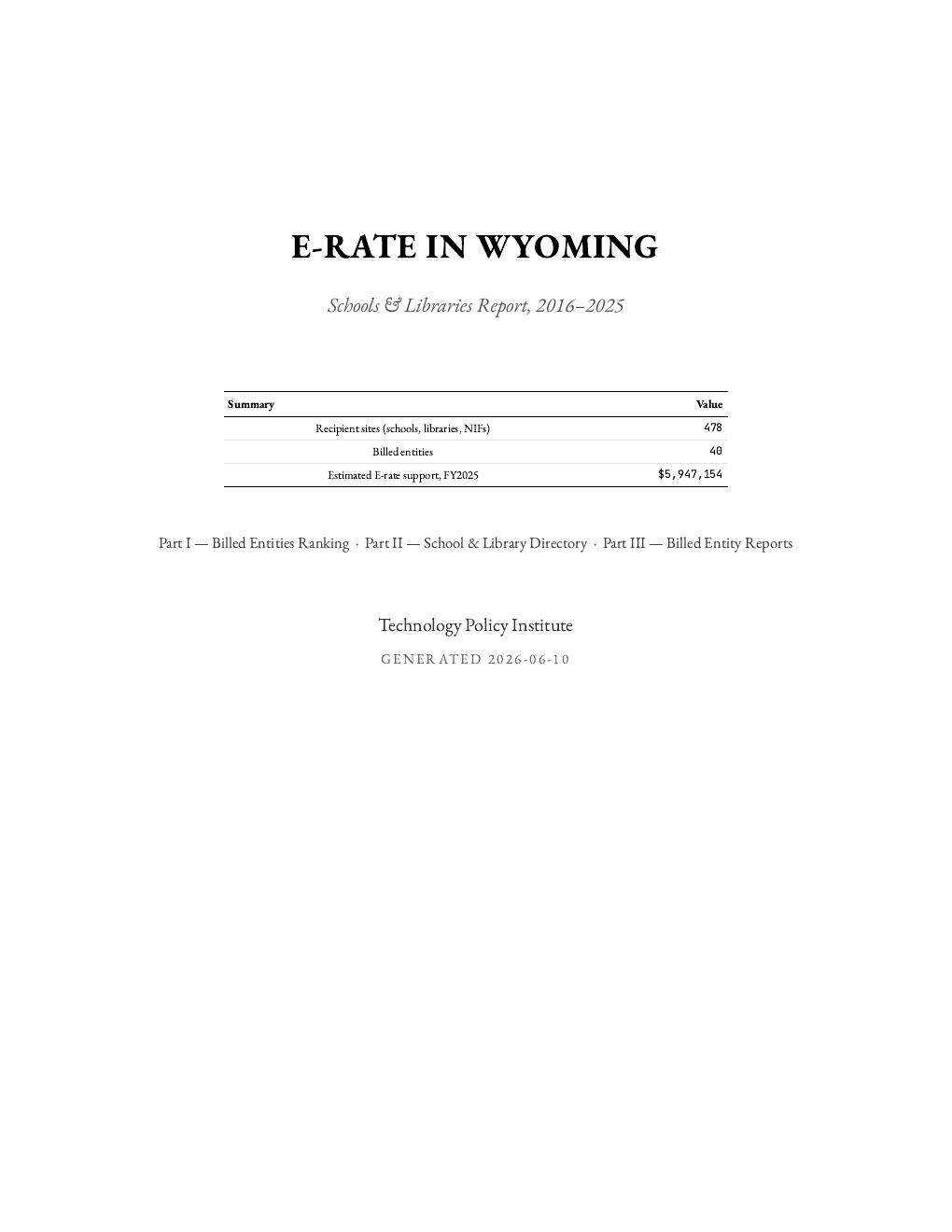
One PDF per state or region covering every billed entity and recipient site — FY1998–2025 where available.






Sources
Primary datasets — USAC Open Data (opendata.usac.org)
All funding figures come from two public datasets maintained by the Universal Service Administrative Company (USAC), the nonprofit administrator of the E-Rate program under FCC oversight.
E-Rate Recipient Details and Commitments (avi8-svp9) is the primary record of every E-Rate funding commitment, covering FY2016–FY2025. Each row represents one service delivered to one recipient site under one Funding Request Number (FRN). Fields include the billed entity number, recipient organization, service type, committed amount, post-discount cost, connection speeds, and recipient coordinates. The dataset contains approximately 21.5 million rows across 11 funding years.
FCC Form 471 FRN Status (qdmp-ygft) tracks the lifecycle of every Funding Request Number from application through commitment and disbursement. The total_authorized_disbursement field — actual dollars approved for payment — is the measure used for all funding totals in this report. USAC continuously updates prior-year rows as invoices are processed, so the most recent one or two funding years always appear lower than their final totals; FY2025 invoices are still being paid as of this writing.
Historical data (FY1998–2015)
USAC's legacy commitment records for FY1998–FY2015 are no longer available on the public open-data portal. TPI downloaded and archived this dataset before it was removed; it now exists only in TPI's private BigQuery project and contains approximately 2.1 million rows. It provides the long historical baseline shown in the funding-history charts. Coverage varies — BEN-level totals are available for most of this period, but site-level recipient data becomes sparse before FY2010.
Key terms
Billed Entity Number (BEN) — the unique identifier USAC assigns to each organization that files an E-Rate application. A single school district, library system, or consortium is one BEN, even if it serves dozens of individual buildings. All funding figures are aggregated at the BEN level first, then rolled up to the congressional district or state. BEN-level totals represent the exact authorized disbursement to that organization; per-recipient-site figures are estimates derived by dividing each FRN line item's post-discount cost equally among the sites it covered.
Category 1 vs. Category 2 — E-Rate divides eligible services into two categories. Category 1 (C1) covers broadband connectivity and telecommunications services that bring internet access to a building: voice telephony, data transmission and internet access, and telecom services. Category 2 (C2) covers the internal network infrastructure needed to distribute that connectivity within a building: Wi-Fi access points, switches, routers, firewalls, and maintenance of those systems. C2 funding has been subject to per-student and per-square-foot budget caps since FY2015. The funding breakdowns in this report follow USAC's six service-type categories: Voice (C1), Telecom Services (C1), Data Transmission and/or Internet Access (C1), Internal Connections (C2), Basic Maintenance of Internal Connections (C2), and Managed Internal Broadband Services (C2).
Study Area Code (SAC) — a legacy identifier used by some telecom carriers in E-Rate filings to identify the geographic service territory of a particular circuit or connection. SACs appear in raw USAC data but are not surfaced in this report, which uses BENs and recipient-site coordinates as the primary geographic keys.
Geographic assignment
Each billed entity is assigned to a single congressional district — using 119th Congress boundaries from the U.S. Census Bureau TIGER/Line 2024 shapefiles — based on whichever district contains the largest number of that BEN's recipient sites, located by their USAC-reported coordinates. For BENs with no usable coordinates, the district listed in the organization's USAC profile is used as a fallback.
What is not included
FY2026 is excluded from all totals and charts because the funding year is still in progress — applications are still being reviewed and commitments are still being issued. The E-Rate invoices dataset (USAC jpiu-tj8h), which records actual disbursed dollars at the invoice level, was not used; all amounts here are authorized commitments from the FRN Status dataset, the standard measure used in E-Rate policy research.